Investing for beginners

Six principles to grow your money over the long term without gambling — the boring, evidence-based approach that quietly builds wealth.

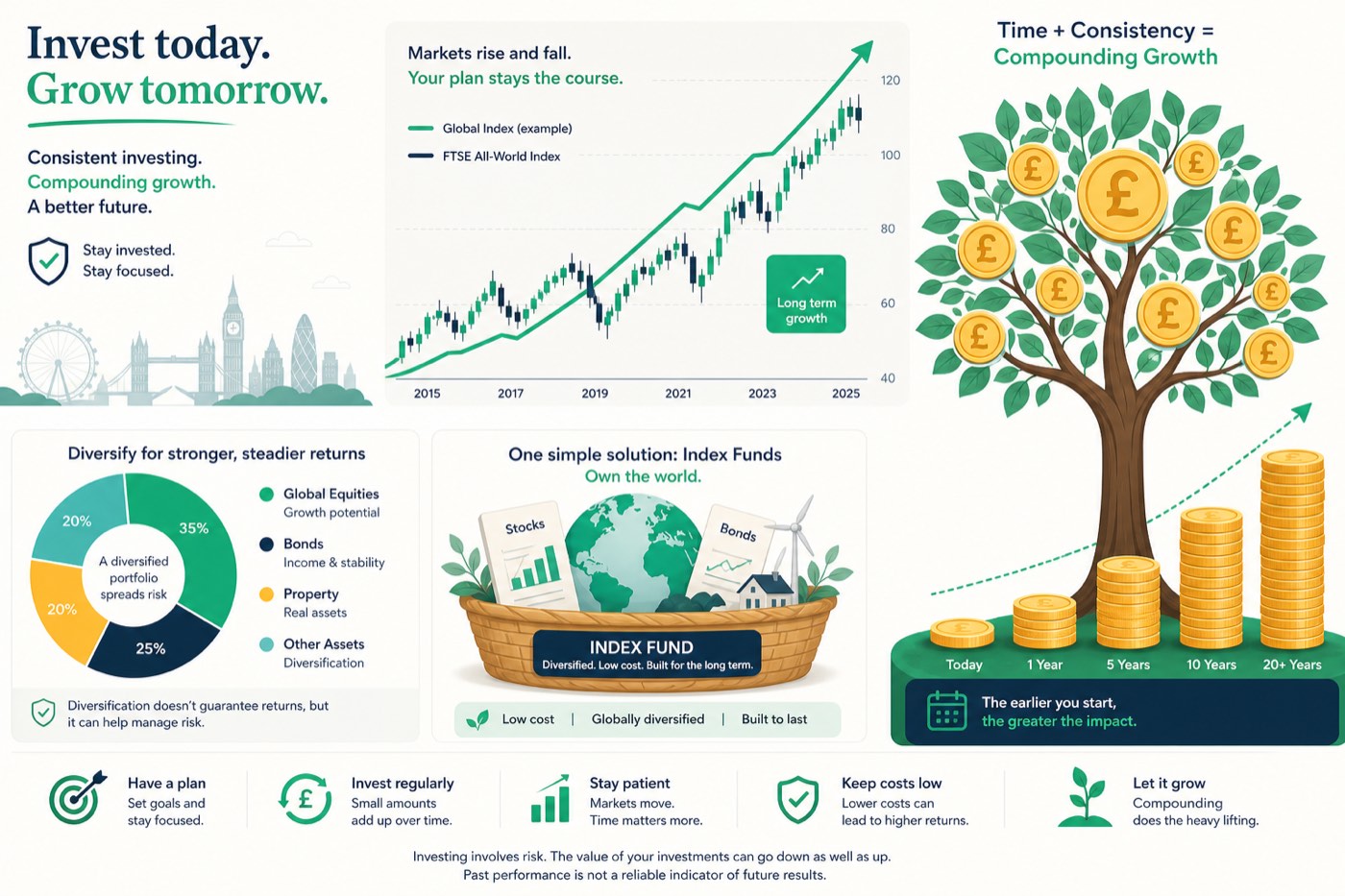
Long-term rising market chart, a diversified portfolio pie chart and compounding pound coins growing into a tree

Before you invest: clear expensive debt and build an emergency fund first. Only invest money you won't need for at least five years. The value of investments can fall as well as rise, and you may get back less than you put in.

1

Start early — let compounding do the work

Compounding means earning returns on your past returns, and over decades it's astonishing. Someone who invests modestly in their 20s can end up with more than someone who invests much more starting in their 40s, simply because their money had more time to grow. The best time to start was years ago; the second best is today, even with small amounts.

2

Keep it simple with low-cost index funds

You don't need to pick individual shares. A global index fund (tracker) spreads your money across thousands of companies worldwide and aims to match the market rather than beat it. Because it's automated, costs are very low — and costs matter enormously over time. A fund charging 0.2% a year rather than 1% can leave you tens of thousands better off over a lifetime.

3

Diversify — don't bet on one thing

Spreading your money across many companies, sectors and countries means no single failure can sink you. A single global fund already does a lot of this for you. Diversification doesn't guarantee a profit or remove risk, but it's the closest thing investing has to a free lunch — smoother returns for the same long-term growth.

Advertisement
4

Invest regularly, ignore the noise

Rather than trying to "time the market", invest a fixed amount each month — a habit called pound-cost averaging. You automatically buy more when prices are low and less when they're high, and you take the emotion out of it. Markets rise and fall; the investors who do best are usually the ones who keep calm and keep going.

5

Shelter it in a Stocks & Shares ISA

Invest through a Stocks & Shares ISA and all your growth and dividends are tax-free, within your £20,000 annual ISA allowance. For long-term goals, pensions are also highly tax-efficient thanks to tax relief (see our pensions guide). Compare platform and fund charges — over decades, low fees are one of the few things fully in your control.

6

Match risk to your time horizon — and avoid scams

The longer you can invest, the more short-term ups and downs you can ride out. Money needed soon should stay in cash savings, not shares. Be deeply sceptical of anything promising guaranteed high returns, pressure to "act now", or crypto and "get-rich-quick" tips from social media — these are classic scam signals. Check any firm is authorised on the FCA Register before handing over a penny.

Quick recap

  • Emergency fund and debt sorted before you start
  • Start early; let compounding work
  • Use low-cost, diversified index funds
  • Invest regularly and stay the course
  • Wrap it in an ISA or pension; beware scams

Frequently asked questions

How much do I need to start?

Many platforms let you start from as little as £25 a month or a small lump sum. Consistency matters more than the amount — the habit is what builds wealth.

Should I invest or overpay my mortgage?

There's no single answer — it depends on your mortgage rate, your tax position and your comfort with risk. Many people do a bit of both. Clearing high-interest, non-mortgage debt almost always comes first.

Where can I get impartial help?

The government-backed MoneyHelper offers free guidance, and for tailored recommendations you can pay a regulated financial adviser. Never rely on tips from strangers online.