UK tax tips & allowances

Seven ways to legally keep more of your money in 2026/27 — from checking your tax code to using allowances most people forget they have.

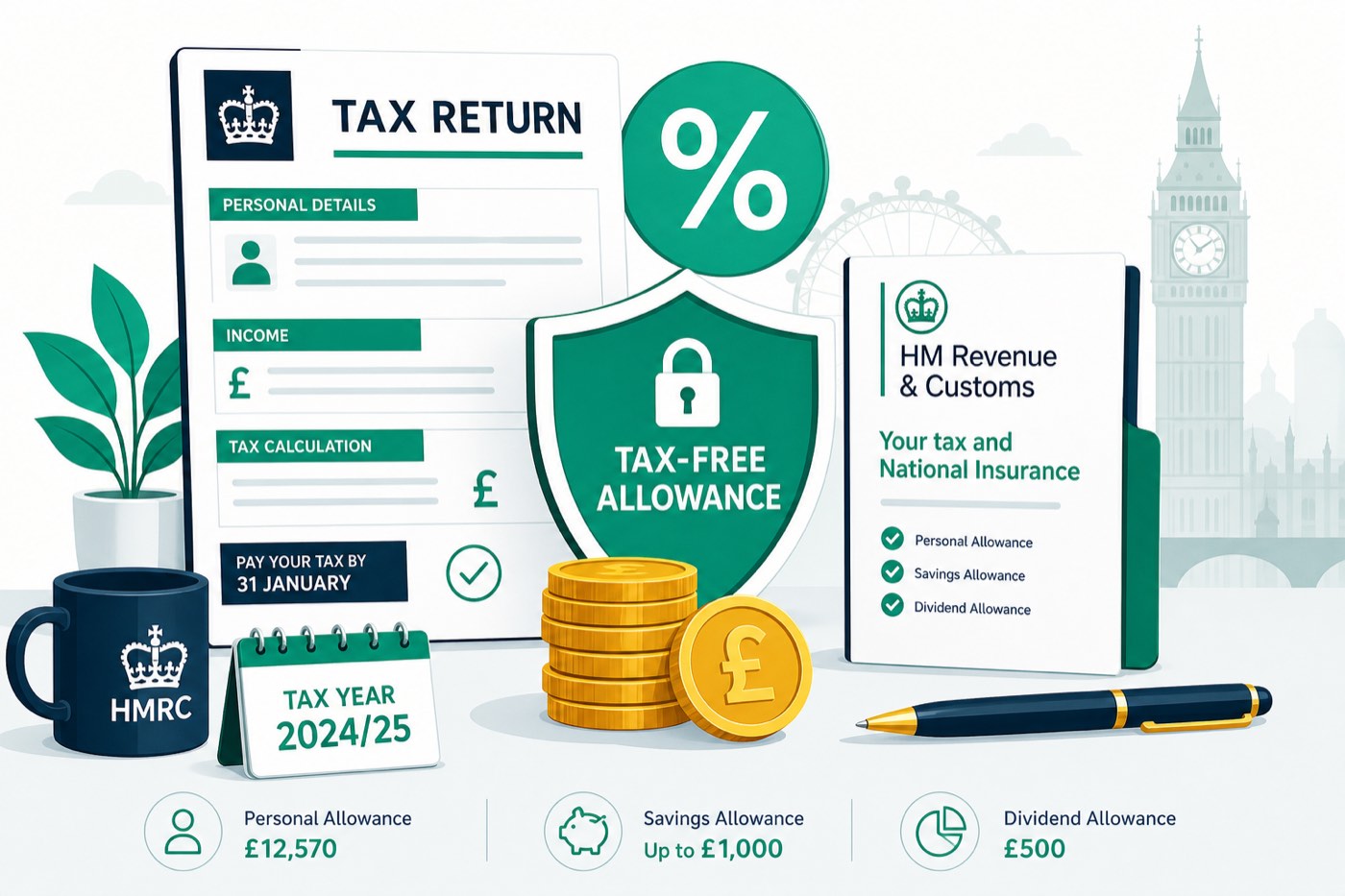
UK tax return, HMRC paperwork and a shield protecting tax-free allowances

Tax is unavoidable — but overpaying isn't. The UK system is full of allowances and reliefs that are yours by right. Using them isn't a loophole; it's simply claiming what you're entitled to. These figures cover England, Wales and Northern Ireland; Scotland sets its own income tax bands.

1

Understand your allowance and tax bands

For 2026/27 the standard Personal Allowance is £12,570 — income up to this is tax-free. Above it, income tax is charged in slices:

  • Basic rate 20% — £12,571 to £50,270
  • Higher rate 40% — £50,271 to £125,140
  • Additional rate 45% — over £125,140

Only the part of your income inside a band is taxed at that band's rate — a pay rise never leaves you worse off overall. Watch the £100,000 trap: between £100,000 and £125,140 your Personal Allowance is withdrawn by £1 for every £2 you earn, creating an effective 60% tax rate on that slice.

2

Check your tax code — it could be costing you

Your tax code tells your employer how much tax-free pay to give you. For most people with one job and the full Personal Allowance, the 2026/27 code is 1257L. A wrong code — for example after changing jobs, having multiple incomes, or a company benefit ending — can mean you overpay (or underpay) all year.

Check your code on your payslip and in your HMRC personal tax account. If it looks wrong, contact HMRC — overpaid tax can usually be refunded, often for previous years too.

3

Claim Marriage Allowance (up to £252/year)

If you're married or in a civil partnership and one of you earns under £12,570 while the other is a basic-rate taxpayer, the lower earner can transfer £1,260 of Personal Allowance to their partner. That saves the household up to £252 a year, and you can usually backdate the claim up to four tax years — potentially over £1,000 as a lump sum.

Apply free through GOV.UK. Beware copycat sites that charge a fee for what is a free HMRC service.

Advertisement
4

Claim tax relief on work costs

If you pay for things needed for your job that your employer doesn't reimburse, you can often claim tax relief, including:

  • Washing a required uniform or protective clothing (a flat-rate allowance)
  • Professional fees and subscriptions to approved bodies
  • Mileage in your own vehicle for work (not commuting)
  • Some costs if you're required to work from home

Claim directly through GOV.UK — you don't need to pay a "tax refund company" a cut.

5

Use your dividend and capital gains allowances

Two smaller but useful allowances for 2026/27:

  • Dividend allowance — £500: the first £500 of dividends is tax-free. Above that, dividends are taxed at 10.75% (basic), 35.75% (higher) or 39.35% (additional).
  • Capital Gains Tax annual exempt amount — £3,000: your first £3,000 of gains from selling shares, a second property or crypto is tax-free.

Married couples get one of each, so holding assets jointly can double these. Moving investments into an ISA ("Bed & ISA") shelters future dividends and gains for good.

6

Cash in "side income" allowances

Have a side hustle, rent a room or earn a bit online? These allowances can keep it tax-free:

  • Trading allowance — £1,000: tax-free income from self-employment or casual selling.
  • Property allowance — £1,000: tax-free income from property (e.g. a driveway or storage).
  • Rent-a-room relief — £7,500: tax-free income from letting a furnished room in your own home.
7

Use pensions and Gift Aid to cut your bill

Pension contributions receive tax relief at your highest rate and can pull your taxable income back below a threshold — for example under £50,270 to stay a basic-rate taxpayer, or under £100,000 to keep your full Personal Allowance and, if relevant, tax-free childcare. Gift Aid donations work similarly for higher-rate taxpayers, who can reclaim extra relief through Self Assessment.

If your affairs are more complex, these are exactly the moves worth checking with an accountant or adviser.

Quick recap

  • Know your bands and avoid the £100k trap
  • Check your tax code is right (usually 1257L)
  • Claim Marriage Allowance and work-expense relief
  • Use dividend (£500) and CGT (£3,000) allowances
  • Pensions and Gift Aid can lower your taxable income

Frequently asked questions

Do I need to file a Self Assessment tax return?

You generally need to if you're self-employed earning over £1,000, have significant untaxed income, are a higher earner with certain income, or receive income HMRC can't collect through your tax code. Check the "Do I need to send a tax return?" tool on GOV.UK.

Is tax different in Scotland?

Yes. Scotland sets its own income tax bands and rates on earned income (with more bands than the rest of the UK). The Personal Allowance, savings and dividend rules are UK-wide.

Are these allowances really free to claim?

Yes — Marriage Allowance, work-expense relief and tax refunds are all free to claim directly from HMRC via GOV.UK. Avoid third-party sites that take a percentage.