Pension & retirement tips

Six moves that can add tens of thousands to your retirement — starting with the free money many people leave on the table.

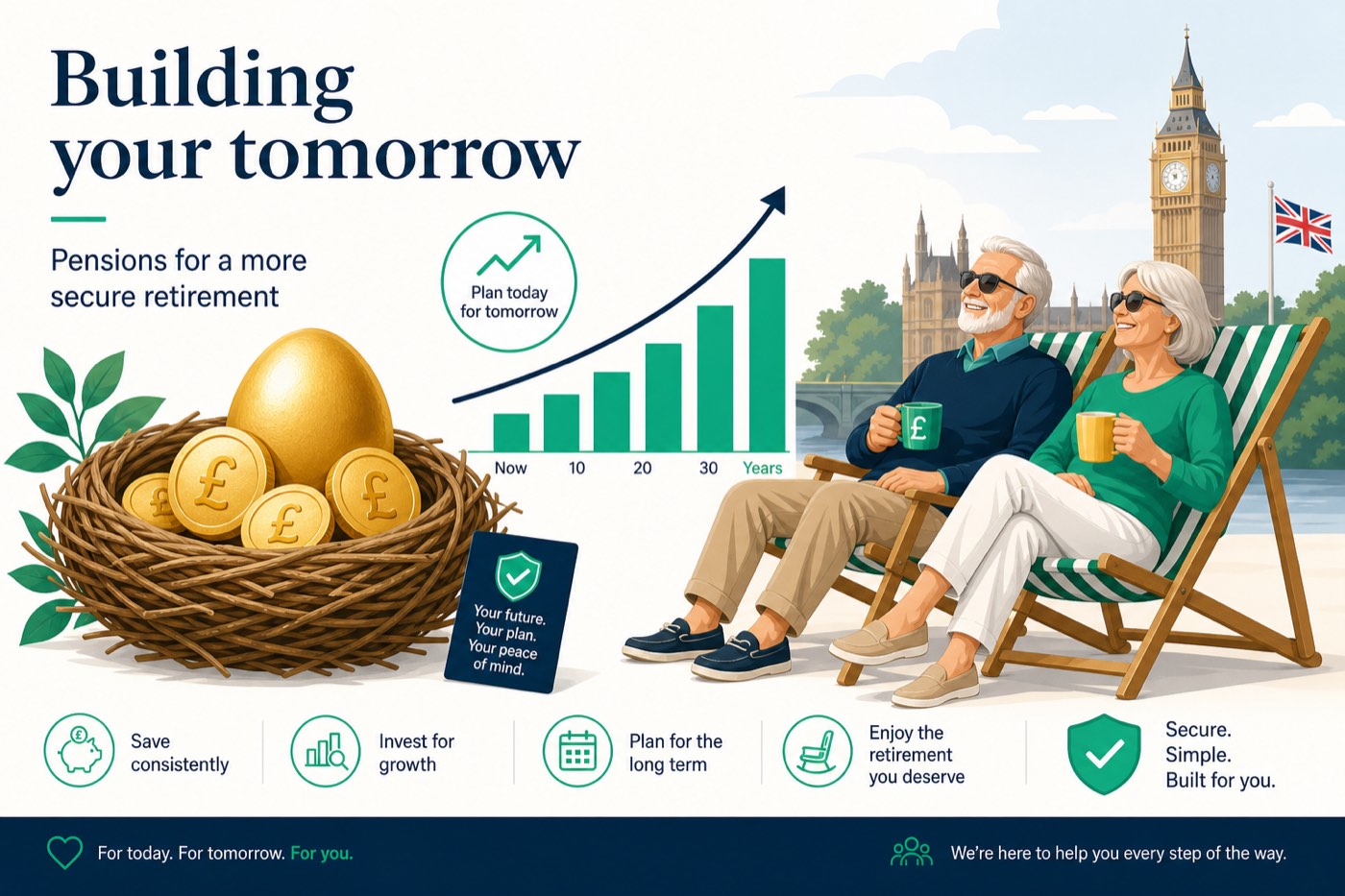
Retired couple relaxing, a golden nest egg of pound coins and a long-term growth chart

A pension is simply a tax-efficient pot for later life — and it comes with two huge advantages you won't find elsewhere: free contributions from your employer and a top-up from the taxman. Use both to the full and retirement gets a lot more comfortable.

1

Grab every penny of your employer match

Under auto-enrolment, minimum workplace pension contributions total 8% of qualifying earnings — at least 3% from your employer and 5% from you. But many employers will pay in more if you do, sometimes matching pound for pound up to a limit.

Not paying enough to unlock the full match is one of the few genuine cases of turning down free money. Ask your HR or payroll team what the maximum match is and, if you can afford it, contribute enough to get all of it.

2

Let the taxman top up your pot

Pension contributions get tax relief at your highest rate. For a basic-rate taxpayer, £100 in your pension costs just £80. A higher-rate taxpayer can claim back more, bringing the effective cost to around £60 — but you often have to claim the extra via Self Assessment, so don't miss it.

You can usually pay in up to £60,000 a year (the annual allowance) or 100% of your earnings if lower, with tax relief. The allowance is tapered for very high earners.

3

Check your State Pension forecast

The full new State Pension is £241.30 a week (about £12,548 a year) for 2026/27. You usually need 35 qualifying years of National Insurance (NI) for the full amount, and at least 10 years to get anything.

Get your free forecast at gov.uk/check-state-pension. It shows what you're on track for and whether you have gaps. Filling gaps with voluntary NI contributions can be remarkable value — but check first, as not everyone benefits.

Advertisement
4

Track down and review old pensions

The average person has several jobs over a career and can lose track of old pots. Use the government's free Pension Tracing Service to find them. Bringing pots together can cut fees and paperwork — but check before you move anything, because some older pensions have valuable guarantees (like guaranteed annuity rates or protected tax-free cash) you'd lose on transfer.

5

Self-employed? Start a personal pension

If you work for yourself there's no employer to enrol you, so it's on you. A personal pension or SIPP (Self-Invested Personal Pension) still gets the same tax relief — the government adds 20% automatically, and higher-rate taxpayers claim more back. Setting up a modest monthly contribution now beats scrambling later.

6

Start early and nudge contributions up

Time is a pension's superpower. Money invested in your 20s and 30s has decades to compound, so early contributions do far more heavy lifting than late ones. A simple habit: whenever you get a pay rise, increase your pension contribution by 1%. You'll barely notice it, but the long-term effect is significant.

Salary sacrifice, where offered, can boost this further by also saving National Insurance.

Quick recap

  • Contribute enough to get your full employer match
  • Claim all your pension tax relief (including higher-rate)
  • Check your State Pension forecast and NI record
  • Find and review old pots before combining them
  • Start early and increase contributions over time

Frequently asked questions

How much do I need to retire?

There's no single number — it depends on the lifestyle you want. Industry "retirement living standards" suggest broad targets, but the practical answer is to check your State Pension forecast, add your private pensions, and use a pension calculator to see the gap. A regulated adviser can help with bigger decisions.

What's the State Pension age?

It's currently rising from 66 to 67 between 2026 and 2028, and depends on your date of birth. Check yours with the "Check your State Pension age" tool on GOV.UK.

Can I take money out early?

Normally you can access a private pension from age 55 (rising to 57 from April 2028). Beware of anyone offering to unlock a pension before then — it's almost always a scam with severe tax penalties.