How to save money in the UK

Seven tips to make your savings work harder in 2026/27 — from using your tax-free allowances to finding the best rates and building a proper safety net.

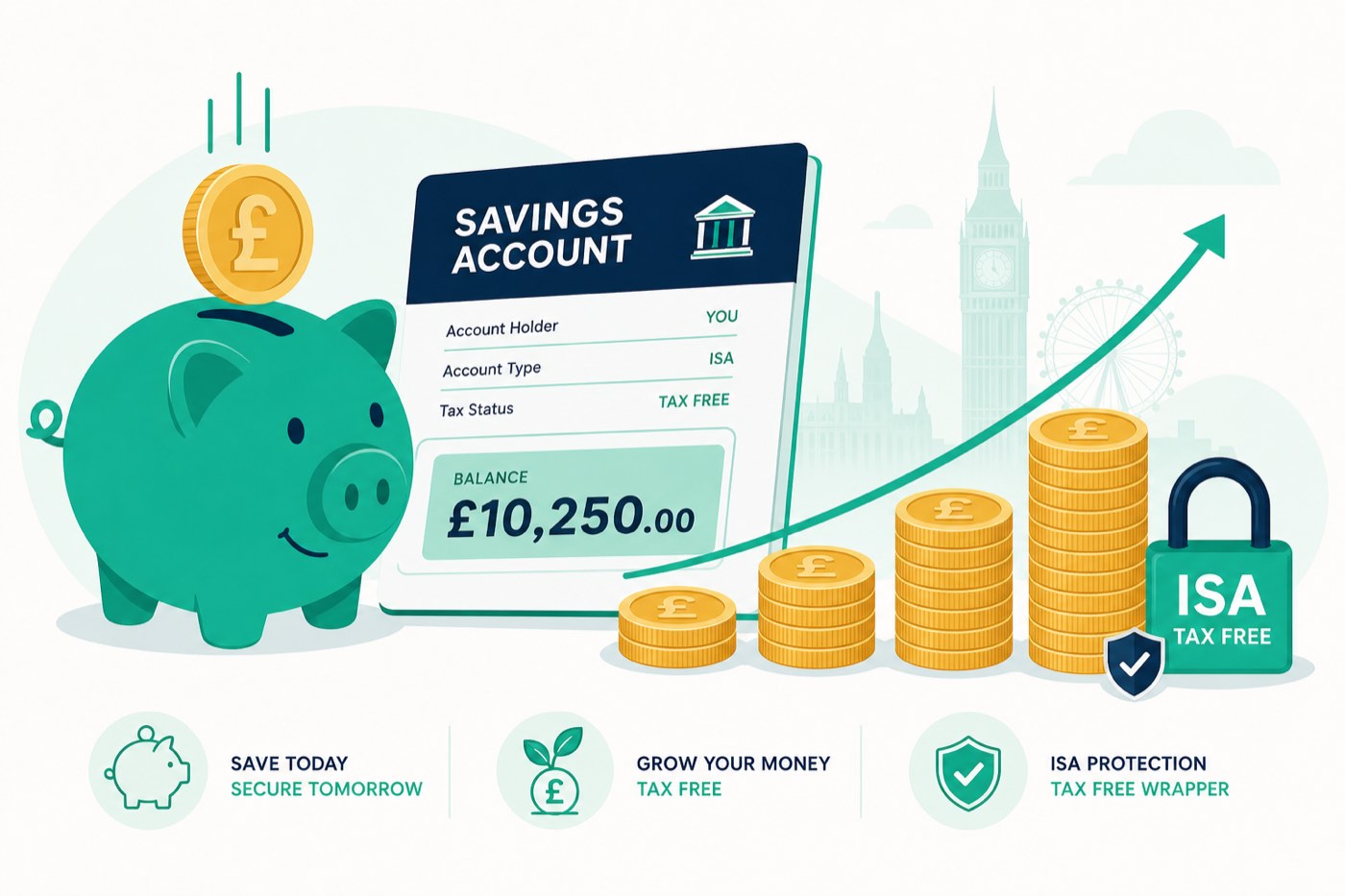
Piggy bank, savings account and growing stacks of pound coins protected by an ISA tax-free wrapper

Saving isn't just about willpower — it's about putting your money in the right place. The same £10,000 can earn you almost nothing in an old high-street account, or a few hundred pounds a year in a top account or ISA. Here's how to make every pound count.

1

Use your £20,000 ISA allowance

An ISA (Individual Savings Account) lets your savings and investments grow completely tax-free. For 2026/27 you can pay in up to £20,000 across all your ISAs combined. You choose how to split it between a Cash ISA, a Stocks & Shares ISA, an Innovative Finance ISA and a Lifetime ISA (the Lifetime ISA is capped at £4,000 within that £20,000).

The allowance is "use it or lose it" — it resets on 6 April and can't be carried into the next year. A Cash ISA suits money you'll need soon; a Stocks & Shares ISA suits money you can leave invested for five years or more.

Heads up: from 6 April 2027 the Cash ISA limit is due to fall to £12,000 a year for under-65s (the overall £20,000 ISA allowance stays). This 2026/27 year is a good time to make full use of a Cash ISA if it suits you.

2

Know your Personal Savings Allowance

Even outside an ISA, most people can earn some interest tax-free thanks to the Personal Savings Allowance (PSA):

  • Basic-rate (20%) taxpayers: £1,000 of interest tax-free
  • Higher-rate (40%) taxpayers: £500 tax-free
  • Additional-rate (45%) taxpayers: £0

With today's higher interest rates it's easier than you'd think to breach this — around £20,000 in an account paying 5% would do it for a basic-rate taxpayer. Anything above your PSA is where an ISA really earns its keep, because ISA interest never counts towards it.

Advertisement
3

Ditch rubbish rates — switch and compare

Big banks often pay next to nothing on their standard savings accounts, quietly relying on customers not to move. Check what yours actually pays, then compare the market. As a rough guide:

  • Easy-access accounts — for money you might need at short notice.
  • Fixed-rate bonds — lock money away for 1–5 years for a higher, guaranteed rate.
  • Regular savers — often pay the highest rates, but on smaller monthly amounts.

Stick to providers covered by the Financial Services Compensation Scheme (FSCS), which protects up to £85,000 per person, per banking licence, if a provider fails.

4

Build an emergency fund first

Before you lock money away or invest, build a cushion of three to six months' essential outgoings in an easy-access account. This stops an unexpected bill — a broken boiler, a car repair, a gap between jobs — from pushing you onto expensive credit.

Aim for the higher end (or more) if your income is irregular or you're self-employed. Automate a standing order the day after payday so saving happens before you can spend it.

5

First home or retirement? Consider a Lifetime ISA

If you're aged 18–39, a Lifetime ISA (LISA) pays a 25% government bonus on what you save — up to £1,000 of free money a year on the £4,000 maximum. You can use it to buy your first home (worth up to £450,000) or for retirement from age 60.

Watch the catch: if you withdraw for any other reason before 60, you pay a 25% government withdrawal charge, which claws back the bonus and a little of your own money too. Only use a LISA for its intended purpose.

6

On a low income? Help to Save pays 50%

Help to Save is a government scheme for people receiving Universal Credit (with a minimum level of earnings) or Working Tax Credit. You can save between £1 and £50 a month and earn a 50% bonus on the highest balance you reach, paid after two and four years — up to £1,200 of bonuses over four years.

It's one of the best guaranteed returns available in the UK. If you're eligible, it's well worth opening through the government's official Help to Save service.

7

Squeeze extra with switching bonuses & Premium Bonds

Two easy extras many people overlook:

  • Bank switching bonuses: banks regularly pay £100–£175+ to switch your current account using the Current Account Switch Service. If you're not attached to your bank, this is easy money.
  • Premium Bonds: run by NS&I, these swap interest for a monthly prize draw. They're 100% government-backed and prizes are tax-free — handy if you've used your ISA and PSA — but returns aren't guaranteed, so they suit spare savings rather than your core pot.

Quick recap

  • Shelter savings in your £20,000 ISA allowance
  • Track your Personal Savings Allowance (£1,000 / £500)
  • Move money out of poor-paying accounts
  • Hold 3–6 months' essentials in easy-access cash
  • Use a LISA (25%) or Help to Save (50%) if eligible

Frequently asked questions

What is the ISA allowance for 2026/27?

£20,000 across all your ISAs combined, with the Lifetime ISA capped at £4,000 of that. The allowance resets each 6 April and can't be carried over.

Cash ISA or Stocks & Shares ISA?

Use a Cash ISA for money you'll need within a few years and want to keep safe. Consider a Stocks & Shares ISA for money you can leave invested for at least five years, accepting that its value can fall as well as rise.

Is my money safe?

Cash held with an FSCS-protected provider is protected up to £85,000 per person, per banking licence. Investments aren't protected against market falls, but the FSCS may cover you if a regulated provider itself fails.