Marriage Allowance: up to about £252 back in your pocket
A simple HMRC transfer for couples where one person does not use all of their Personal Allowance.
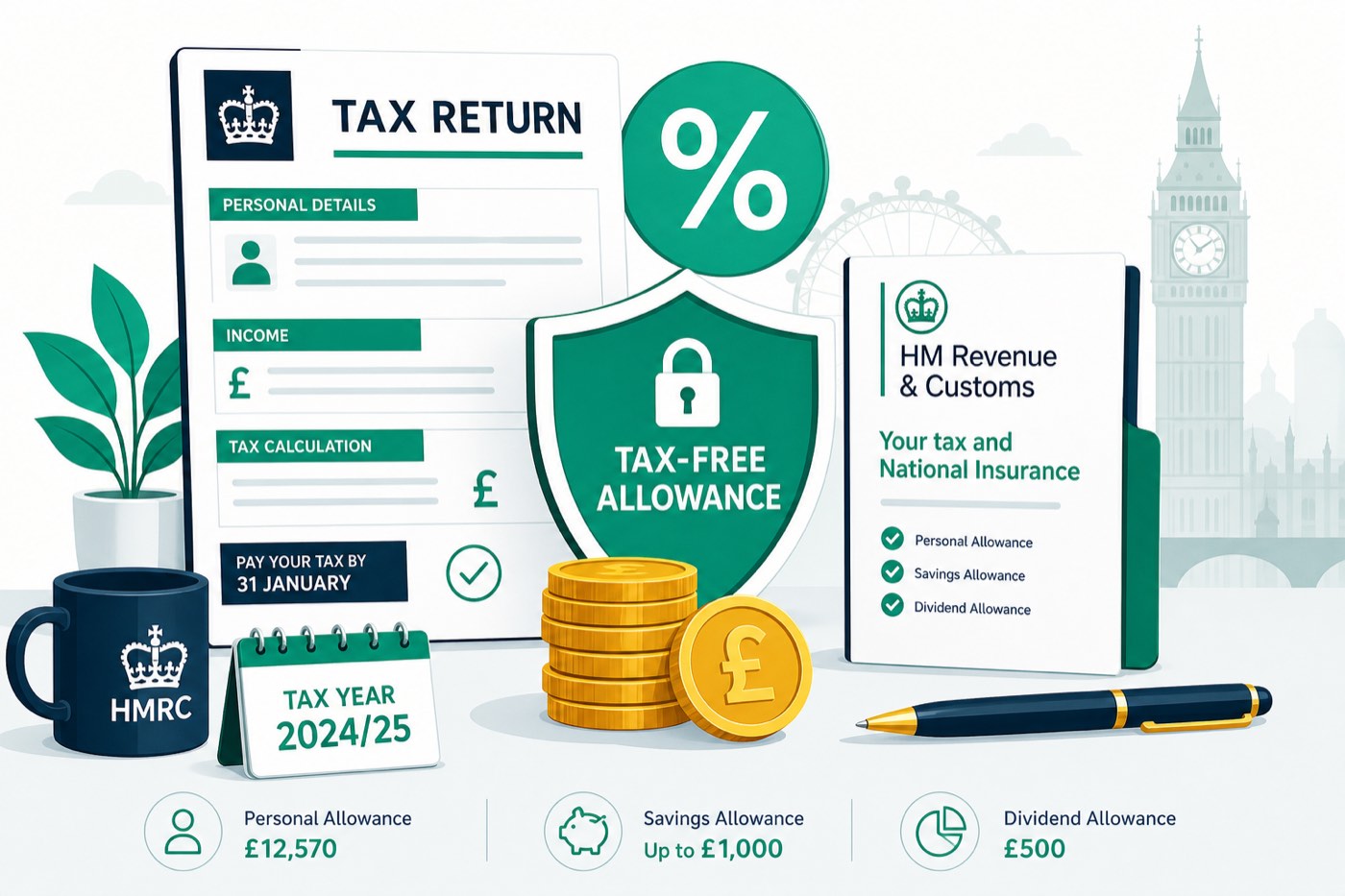
Marriage Allowance lets one spouse or civil partner transfer 10% of their Personal Allowance — £1,260 when the allowance is £12,570 — to the other. At the 20% basic rate that is worth up to about £252 a year. You must be married or in a civil partnership; living together is not enough.
Who this guide is for
Married couples and civil partners where one partner has unused Personal Allowance and the other is generally a basic-rate taxpayer. It covers the 2026/27 transfer and back-claim logic.
Not for: Unmarried couples, or couples where the recipient pays higher or additional rate; the standard eligibility test will not fit.
Who qualifies
Typically, one partner has income below the Personal Allowance (or unused allowance) and the other is a basic-rate taxpayer. If the recipient pays higher-rate tax, you usually cannot claim. Both must have been born after 5 April 1935 for this allowance (older couples may look at Married Couple’s Allowance instead).
Same-sex civil partners and married couples are included. You apply as a couple through HMRC; it is not automatic.
How the transfer works
The lower earner’s tax code may show N and the higher earner’s M (or similar), reflecting the transfer. The lower earner’s remaining allowance falls; the higher earner’s rises by £1,260.
Backdating is often possible for prior years if you were eligible but did not claim — check current HMRC backdating limits when you apply. That can turn a £252 annual win into a four-figure refund.
Interaction with other tax moves
Marriage Allowance does not replace ISAs or the Personal Savings Allowance. It is about Income Tax on earnings and similar income. If both of you already use full Personal Allowances, there is nothing to transfer.
Self-employed partners claim via the same HMRC process; payment mechanics may differ from PAYE but the eligibility idea is identical.
When not to claim
If it would push the recipient into a worse overall position (rare but possible with complex reliefs), or if you are not actually eligible, do not guess — use HMRC’s checker. Separating couples should update HMRC so codes do not stay wrong.
Test the couple, not one salary
Marriage Allowance lets an eligible spouse or civil partner transfer £1,260 of Personal Allowance. The recipient's tax can fall by up to £252 for the year because 20% of £1,260 is £252. It is not a cash transfer between partners and it does not mean every qualifying couple receives £252: the recipient needs enough basic-rate liability to use it.
| Partner | Illustrative 2026/27 income | Effect |
|---|---|---|
| Transferor | £10,800 | Below £12,570 allowance; transfer may fit |
| Recipient | £31,000 | Basic-rate taxpayer; up to £252 saving |
| Transferor edge case | £12,200 | Transfer can make £890 taxable |
The edge case matters. If a person earning £12,200 transfers £1,260, their remaining allowance is £11,310, potentially making £890 taxable at 20%—about £178—while the partner saves £252. The couple may still be roughly £74 better off, but “the lower earner pays no tax” is no longer true. Savings and dividends can also affect the calculation.
Applications are normally made by the person transferring allowance. A successful claim can change both PAYE codes, often adding an M to the recipient's code and N to the transferor's. Self Assessment may handle the benefit through the return instead. Claims can usually be backdated for up to four tax years when eligibility existed, but deadlines roll forward each April.
- Confirm legal marriage or civil partnership for each year claimed.
- Calculate the lower earner's total taxable income, not salary alone.
- Check the recipient did not exceed the relevant basic-rate limit; Scottish taxpayers have a specific eligibility test.
- Compare tax created for the transferor with tax saved by the recipient.
- Apply through GOV.UK and review changed tax codes.
- Cancel or update the claim if income changes make it unsuitable.
Second example: Priya stopped work to care for a child in 2023/24 and her spouse remained basic rate through 2026/27. If all conditions hold and claims are still within time, four years could produce up to £1,008 in combined reductions. If the spouse became higher rate for one year, that year's entitlement needs separate checking rather than assuming an all-or-nothing four-year claim.
Marriage Allowance differs from Married Couple's Allowance, which generally concerns couples where at least one partner was born before 6 April 1935. Check eligibility and deadlines at GOV.UK. This is general tax information.
Worked example: part-time plus full-time
Aya earns £8,000 part-time; Noel earns £28,000 and pays basic-rate tax. Aya has unused Personal Allowance. They claim Marriage Allowance: £1,260 moves to Noel, cutting his tax by about £252 for 2026/27. They also apply to backdate two eligible prior years and receive an additional refund into the bank account linked to Noel’s tax record.
Step-by-step checklist
- Confirm you are married or in a civil partnership
- Check one partner has unused Personal Allowance
- Confirm the recipient is not a higher-rate taxpayer
- Apply via HMRC’s Marriage Allowance service
- Watch tax codes for M/N indicators after approval
- Ask about backdating for earlier eligible years
- Update HMRC if you divorce or dissolve a partnership
Common mistakes
- Assuming cohabiting couples can claim
- Claiming when the higher earner is on the higher rate
- Forgetting to backdate and missing prior-year refunds
- Ignoring tax code letters after the claim goes through
When to get regulated help
Claim and check eligibility on GOV.UK. For a neutral explanation of whether it fits your household, read MoneyHelper.
Frequently asked questions
How much can Marriage Allowance save in 2026/27?
Up to about £252 if you transfer £1,260 and it is taxed at 20%.
Can we claim if we married overseas?
Often yes if the marriage is recognised in the UK — follow HMRC guidance for evidence.
Does it affect benefits?
It changes Income Tax, not Universal Credit entitlement directly, but always check your wider position if income is tightly means-tested.
Is Married Couple’s Allowance the same thing?
No — that is a different relief mainly for older couples. Do not apply for the wrong one.