Clear debt & boost your credit score

Six practical steps to escape expensive debt faster and lift your credit score — all of which you can do yourself, for free.

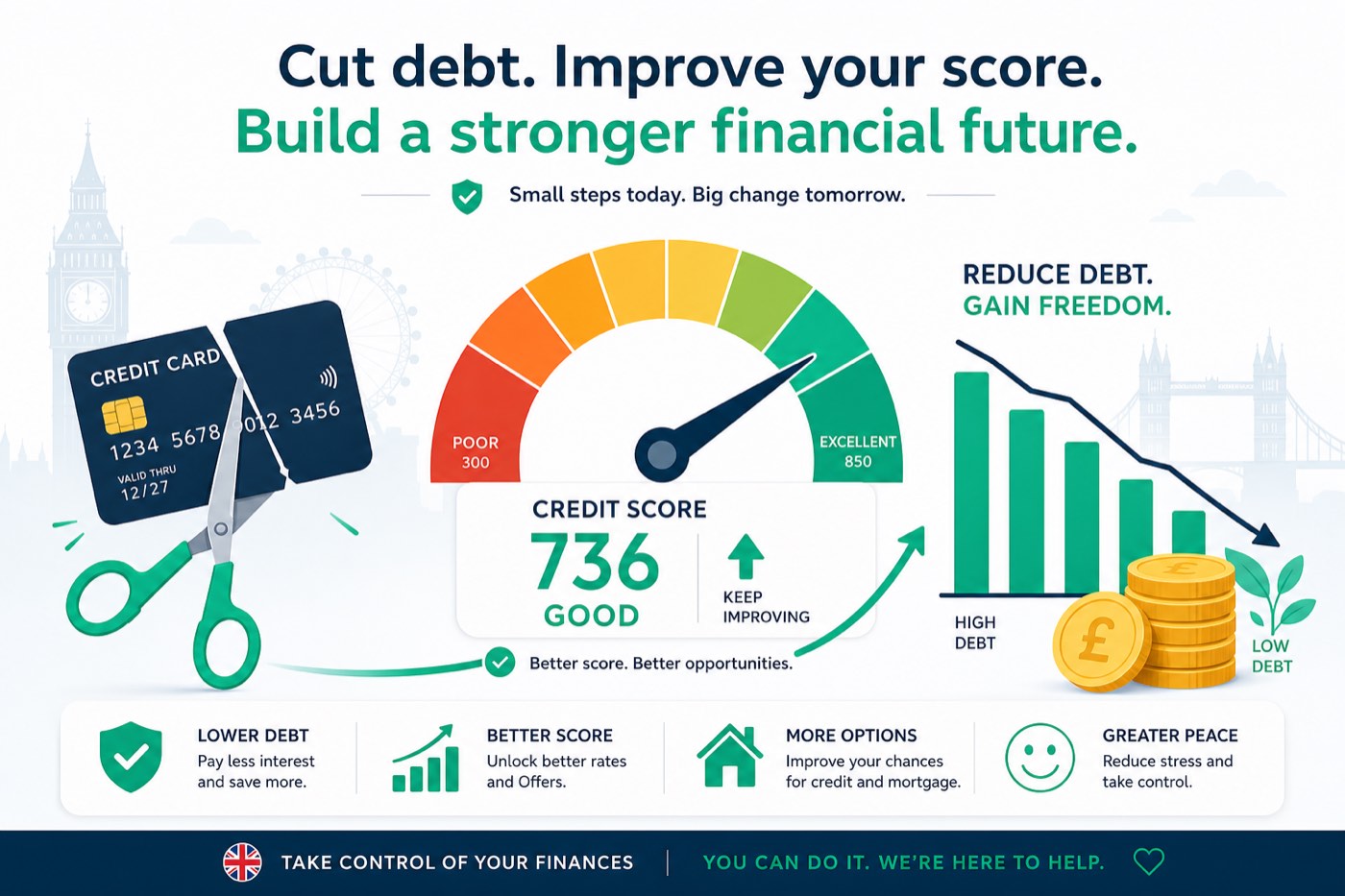
Credit score gauge moving from red to green, scissors cutting a card and a falling debt chart

Debt isn't a moral failing — but expensive debt is a wealth-killer, and a poor credit score quietly makes everything from mortgages to car insurance cost more. The good news: you can take back control with a few clear steps, none of which need a paid service.

1

Check your credit report (free) and fix errors

You have three main credit reference agencies in the UK — Experian, Equifax and TransUnion — and lenders may use any of them. Check all three (there are free ways to see each) and look for mistakes: wrong addresses, accounts that aren't yours, or a default that should have dropped off. Errors are common and drag your score down, so dispute anything wrong.

Two quick wins: make sure you're on the electoral roll at your current address, and close old accounts you no longer use.

2

Attack your most expensive debt first

List every debt with its interest rate (APR). Pay the minimum on all of them, then throw every spare pound at the one with the highest interest rate — usually payday loans, then credit cards and overdrafts. This "avalanche" method saves the most money.

Prefer quick wins for motivation? The "snowball" method clears the smallest balance first. Both work — the best method is the one you'll stick to.

3

Stop the interest with a 0% deal

If you have good credit and card debt, a 0% balance transfer card can freeze interest for a set period, so every payment reduces the actual debt instead of the interest. Watch the one-off transfer fee, always clear (or move) the balance before the 0% ends, and never spend on the card. Used with discipline, it can save hundreds and clear debt far faster.

Advertisement
4

Know your priority debts

If money is tight, some debts matter far more than others because the consequences are severe. Priority debts should always be paid first:

  • Rent or mortgage (risk of losing your home)
  • Council tax (can lead to court and bailiffs)
  • Gas and electricity
  • Court fines and tax debts to HMRC

Credit cards, personal loans and overdrafts are usually non-priority — still important, but they come after keeping a roof over your head and the lights on.

5

Get free debt advice — never pay for it

If debt feels unmanageable, free and confidential help is available from StepChange, National Debtline, Citizens Advice and the government-backed MoneyHelper. They can check your entitlements, talk to creditors, and set up solutions like a Debt Management Plan or a Breathing Space. Steer clear of companies that charge for debt advice or promise to "write off" debt for a fee.

6

Never pay just the minimum

Paying only the minimum on a credit card can stretch repayment over decades and cost more in interest than the original spending. Always pay more than the minimum where you can. And keep your credit utilisation — the percentage of your limit you're using — well below 30%, as lower utilisation helps your score.

Quick recap

  • Check all three credit reports and fix errors
  • Get on the electoral roll
  • Clear the highest-interest debt first
  • Use 0% deals with discipline
  • Pay priority debts first; get free advice if needed

Frequently asked questions

What is a "good" credit score?

Each agency uses a different scale, so there's no universal number and lenders set their own criteria. Rather than chasing a figure, focus on the habits that lift any score: pay on time, stay well within limits, and keep your report accurate.

How quickly can I improve my score?

Some fixes (like registering to vote or correcting an error) can show within weeks, but rebuilding after missed payments takes months of consistent, on-time payments. There are no legitimate overnight shortcuts.

Will debt advice hurt my credit?

Getting advice itself doesn't affect your score. Some solutions (like a Debt Management Plan) can, but if you're already struggling, the priority is getting affordable, sustainable help.