Use a 0% balance transfer with discipline
A 0% deal can freeze interest so every payment cuts the real debt — but fees, eligibility and the end date need a written plan.
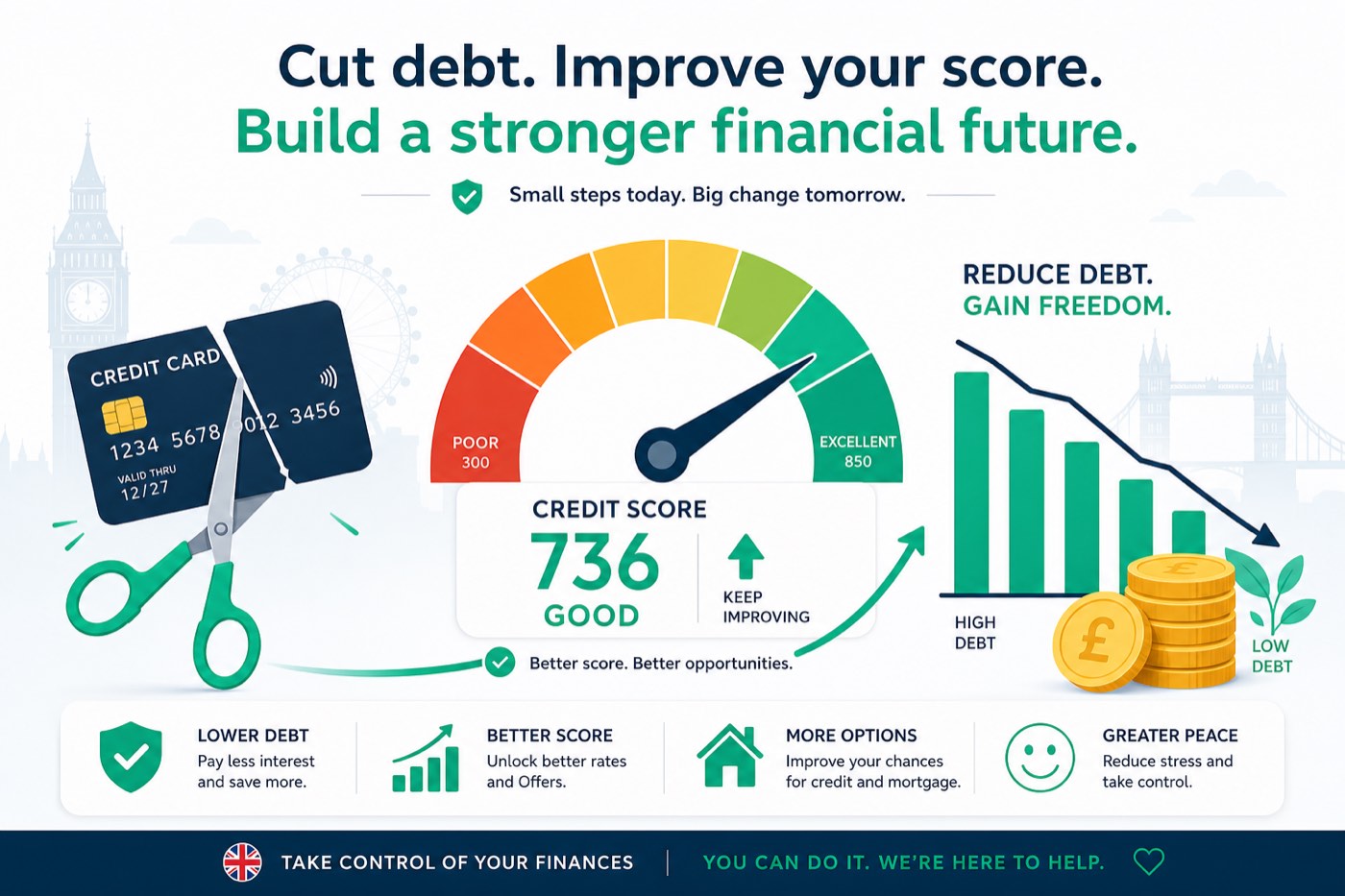
If you hold revolving credit-card debt and your credit file is reasonably healthy, a 0% balance transfer card can move eligible balances onto a new card with no interest for a set period. During that window, payments reduce the debt itself rather than feeding interest. Used with a repayment schedule — and never as an excuse to spend again — it can save hundreds of pounds. Used casually, the promotional rate ends and interest can return with a jolt.
Who this guide is for
UK cardholders considering moving existing credit-card debt to a temporary 0% deal and who can make a fixed repayment plan. It explains fees and expiry risk.
Not for: People already missing priority bills or unable to afford minimum payments; a new card is not a substitute for free debt advice.
How transfers work and what they cost
You apply for a card advertising 0% on balance transfers for a number of months. If accepted, you transfer balances from other cards (subject to the new limit). There is usually a one-off transfer fee (for example a percentage of the amount moved). Factor that fee into the savings calculation.
Not all debts transfer; cheques, some providers, or amounts above your limit may be excluded. Purchases on the new card may have a different rate — many people avoid spending on the transfer card entirely.
Timing matters. Transfers can take days or a couple of weeks. Keep paying the old cards until the balance has actually moved so you do not collect a late mark. After the transfer, confirm the old balances are zero (or at the residual you expected) before you stop the old direct debits.
If your available limit on the new card is lower than your total card debt, transfer the most expensive balances first and keep avalanche/snowball running on whatever remains. A partial transfer is still useful when it stops the worst interest.
Compare deals carefully and read the terms. MoneyHelper covers balance transfers: balance transfer credit cards.
Build a repayment plan before you apply
Divide the transferred balance (plus fee) by the number of 0% months, and aim to clear it before the promo ends. Automate standing orders for that amount or more. If you cannot clear in time, plan a further transfer or accept that interest will apply — do not discover the end date by surprise.
Keep old cards idle if needed for the transfer to complete, then avoid running up balances again. The goal is cheaper repayment, not a higher total credit lifestyle.
Who should think twice
If you are already missing payments, drowning in priority arrears, or likely to spend the newly freed limits, a transfer may not fix the underlying problem — free debt advice is the better first call. Multiple applications can also leave footprints on your credit file.
Households with thin credit histories sometimes fail eligibility checks even when the maths of a transfer would help. In that case, focus on on-time payments, electoral roll registration and utilisation for a few months, then revisit. A declined application is not a reason to accept the first expensive “guaranteed approval” card advertised in a sidebar.
Keep a one-page summary: old APR, new fee, months of 0%, monthly clearance amount, and promo end date. Share it with a partner if you budget jointly so nobody treats the newly empty card as free spending room.
Make the 0% deadline useful
A 0% balance-transfer card postpones interest on an eligible transferred balance for a stated period. It does not erase debt, guarantee acceptance or necessarily cover purchases and cash withdrawals. Providers commonly charge a transfer fee added to the balance and set a short window after opening for promotional transfers.
| Transfer | Fee | Starting plan balance | 24-month clearing payment |
|---|---|---|---|
| £3,000 | 2.9% = £87 | £3,087 | £128.63/month |
| £5,500 | 3.5% = £192.50 | £5,692.50 | £237.19/month |
Compare the fee with avoided interest, not with zero. If £3,000 would otherwise sit at 27.9% and take two years to clear, an £87 fee may be worthwhile. If it would be repaid next month, the fee could exceed the interest saved. Eligibility checkers using soft searches can reduce unnecessary hard applications, but their indication is not a guarantee.
Second example: Frances transfers £4,200 with a 3% fee, creating £4,326, on an 18-month offer. Dividing gives £240.34, so she sets £245 monthly and a reminder two months before expiry. After 12 months an emergency causes one £100 payment. She recalculates the remaining balance rather than assuming the original standing order still clears it. At expiry, any remainder may move to a high standard rate.
- Check which existing cards are eligible; transfers within the same banking group may be excluded.
- Calculate balance plus fee and divide by months with a safety margin.
- Set Direct Debit for at least the minimum and a separate fixed overpayment if needed.
- Do not spend on the card unless purchases are explicitly promotional and the payment-allocation rules are understood.
- Record transfer deadline, 0% end date and standard APR.
- Stop new debt accumulating on the old card.
Missing a payment can lose the promotion and damage the credit file. A minimum-payment Direct Debit protects against forgetfulness but will not clear the balance in time because minimums usually fall as the balance falls. Do not assume another transfer will be available at expiry; lending criteria and credit limits can change.
Closing the old card may reduce temptation, but first move recurring subscriptions and consider whether reducing total available credit affects future applications. Never falsify income or household costs. If repayments are not sustainable without repeated transfers, use MoneyHelper to find free help. This is general information, not a credit recommendation.
Worked UK example: fee vs interest saved
Nina has £3,000 on a card at ~22% APR and is offered 0% for 28 months with a 3% transfer fee (£90). She moves the balance and commits to about £110 a month to clear £3,090 before month 28.
Without the transfer, interest would have kept rebuilding the balance if she only paid a little more than the minimum. With the transfer, nearly every pound of that £110 reduces debt. Nina cuts up spending temptation on both cards and diaries the promo end date three months early in case she needs a Plan B.
Step-by-step checklist
- Total eligible card balances and estimate interest if you stay put.
- Compare 0% duration, transfer fee and eligibility criteria.
- Check whether you can repay in full before the promo ends.
- Apply for one suitable card — avoid scattergun applications.
- Transfer the balance and confirm it shows on the new account.
- Automate a clearance payment schedule; do not spend on the new card.
- Set reminders 3 months before 0% ends.
Common mistakes
- Transferring and then spending on the new card.
- Ignoring the transfer fee in the “savings” maths.
- Missing the end of the 0% period.
- Using transfers repeatedly without fixing overspending.
When to get regulated help
Read MoneyHelper on balance transfers. Struggling to repay even at 0%? Contact StepChange or National Debtline for free advice.
Frequently asked questions
Will I get approved for a 0% card?
It depends on your credit file, income and the lender’s criteria. Approval is never guaranteed — check eligibility checkers that use soft searches where offered.
Can I transfer an overdraft or loan?
Balance transfer cards usually move credit-card balances. Loans and overdrafts follow different products and rules.
Does a balance transfer affect my credit score?
Applying can leave a search footprint, and your utilisation across accounts may change. Used to reduce costly debt responsibly, many people still find it worthwhile — but it is not risk-free for your file.
What happens when 0% ends?
Interest usually switches to the card’s standard rate on the remaining balance. Clear or move the debt before that date if you can.
Can I transfer more than my new credit limit?
No. Providers often cap transfers below the full credit limit and add the fee, so the transferable amount may be lower than expected.