Stocks & Shares ISAs explained
Use the £20,000 ISA allowance to shelter investments from UK tax on growth and dividends — while remembering markets can fall.
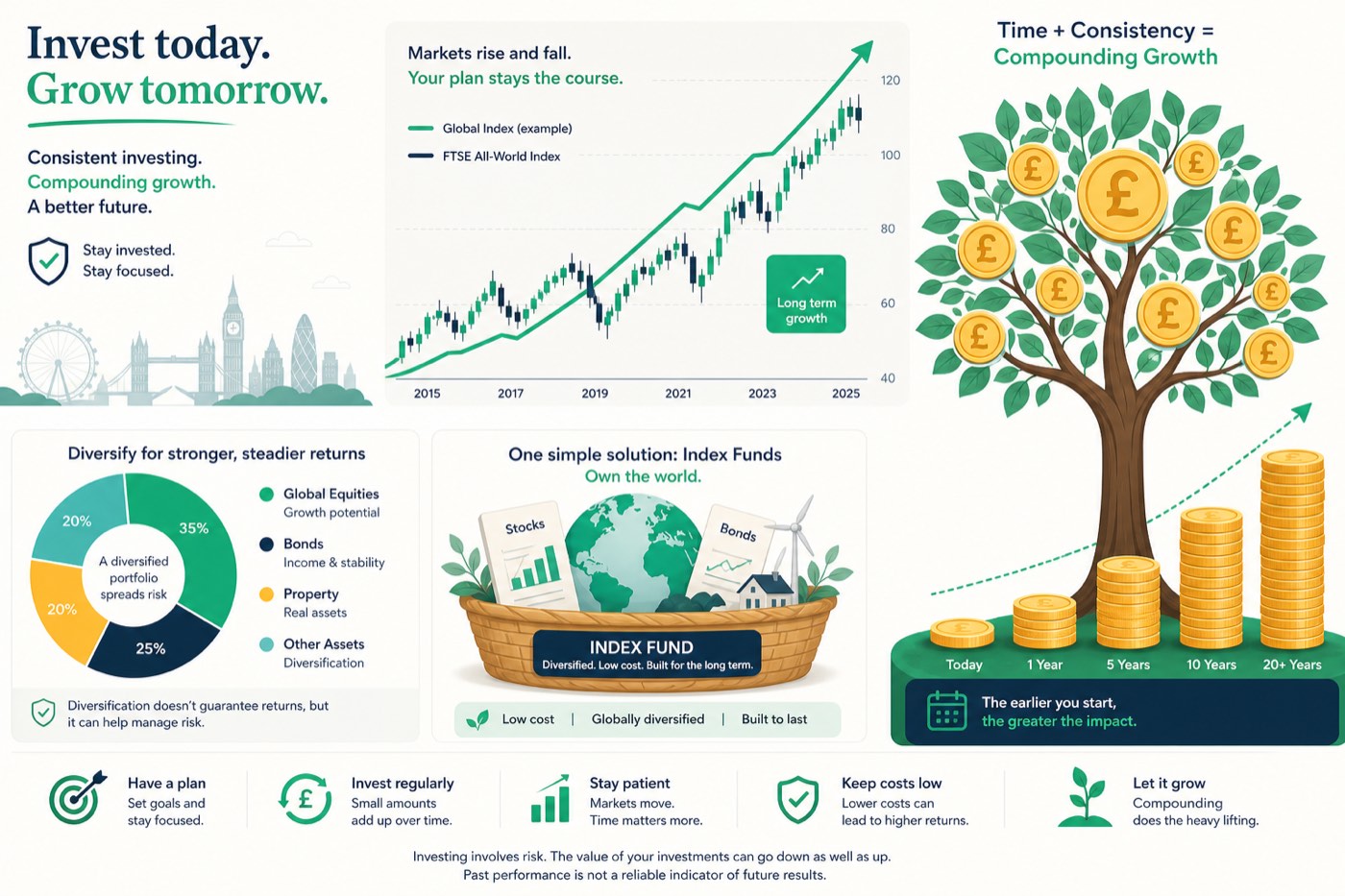
A Stocks & Shares ISA is a tax wrapper, not an investment itself. Inside it you can hold funds, shares and other permitted investments; UK tax is generally not charged on capital gains or dividends within the ISA under current rules. For the 2026/27 tax year the overall ISA allowance is £20,000, shared across the ISA types you choose to fund. Investments can fall as well as rise and you may get back less than you put in. This article is general information, not a personal recommendation.
Who this guide is for
UK adults considering holding long-term investments in a tax-efficient ISA during 2026/27. It helps separate the tax wrapper from the investments inside.
Not for: People who need the money soon, cannot accept losses or want a personalised portfolio recommendation.
Allowance basics for 2026/27
You can pay into more than one ISA type in a tax year, but total subscriptions must stay within the £20,000 overall limit unless GOV.UK announces different rules — always verify on GOV.UK. Unused allowance does not roll forward. Transfers between ISA providers are usually possible without losing the wrapper, but follow the transfer process; do not withdraw and repay casually or you can mess up the allowance.
Cash ISAs suit near-term savings; Stocks & Shares ISAs suit longer horizons where you accept volatility. Many households use both for different jobs.
Flexible ISAs (where offered) can allow you to replace withdrawals in the same tax year without losing allowance — useful if you mis-time a transfer of cash — but product terms differ. Always read whether your account is flexible before treating it like a current account. Junior ISAs and Lifetime ISAs have separate rules and limits; do not assume the £20,000 adult allowance works the same way for children or LISA bonuses.
What tax advantages usually mean in practice
Within a Stocks & Shares ISA, you typically do not pay UK capital gains tax on growth or tax on dividends from investments held in the account, under current rules. That can matter once portfolios grow beyond annual exemptions outside ISAs — but tax rules change, so confirm current treatment before acting.
An ISA does not make a bad investment good. A high-charging, concentrated product inside an ISA is still high-charging and concentrated.
Outside an ISA, UK investors may have a dividend allowance and a capital gains tax annual exempt amount — both have been tightened in recent years compared with older headlines you might remember. That is one reason wrappers matter more as pots grow. Still, tax efficiency never justifies investing money you cannot afford to leave invested through a downturn.
Choosing platforms and holdings carefully
Compare platform fees, fund lists and ease of regular investing. Favour diversification and costs you understand. Global index funds are a common building block for long-term investors, but suitability depends on your circumstances — we are not advising you to buy one.
- Check whether fees are percentage-based, flat, or both
- Read how dividend reinvestment works
- Know how to transfer out later without friction
Some platforms shine for frequent share trading; others are built for simple monthly fund investing. If you only need one or two funds, a clean low flat fee or low percentage fee often beats a broker designed for active traders. Watch foreign-exchange fees if you buy US-listed ETFs when a sterling-priced fund would do the same job.
Risks, scams and regulated help
Cold callers offering "guaranteed ISA returns" or pressure to move money quickly are classic red flags. Check every firm on the FCA Register and use the FCA Warning List. For impartial guidance, see MoneyHelper.
If you need a personal recommendation, speak to an FCA-regulated financial adviser. Smart Money Answers is not one.
Finally, remember the allowance is per person per tax year. Couples sometimes plan subscriptions so each uses their own £20,000 — that is household organisation, not a loophole. Keep confirmations of what you paid in; if HMRC ever queries ISA subscriptions, paperwork saves headaches.
The wrapper and the investments
A Stocks & Shares ISA is a tax wrapper, not an investment. Inside it you might hold funds, shares, bonds or cash permitted by the provider. Returns are not guaranteed and the ISA label does not protect against market falls. Its main benefit is that eligible income and gains within the wrapper are generally free of UK income tax and Capital Gains Tax, with no routine reporting of those internal transactions.
| 2026/27 point | Amount / rule | Practical meaning |
|---|---|---|
| Overall ISA allowance | £20,000 | Shared across ISA types |
| LISA maximum | £4,000 | Part of, not added to, £20,000 |
| Old ISA transfer | Provider process | Normally does not use new allowance |
| Investment loss | No tax compensation | Wrapper does not remove risk |
Second example: Ben contributes £7,000 to a cash ISA and £13,000 to a Stocks & Shares ISA in 2026/27, using the £20,000 total. Moving £8,000 from an older ISA through an official transfer does not normally consume this year's allowance. Withdrawing the old ISA himself and resubscribing could consume allowance unless flexible-ISA rules apply exactly.
Platform charges can dominate on small balances or frequent trades. Compare percentage custody fees, fixed fees, fund charges, dealing costs, foreign-exchange spreads and exit/transfer costs. A £60 fixed annual fee is 1.2% of £5,000 but only 0.12% of £50,000. Percentage and fixed-fee platforms suit different patterns.
- Keep emergency and near-term goal money in suitable cash.
- Set a minimum horizon and risk level before opening the account.
- Choose diversified holdings and understand what they own.
- Calculate all-in yearly cost in pounds at your expected balance.
- Use provider-led ISA transfers; never assume a withdrawal preserves status.
- Record subscriptions across providers and stop before exceeding the allowance.
A flexible ISA may allow current-year withdrawals to be replaced without using allowance, but flexibility is provider- and account-specific; replacing in a different ISA can fail the rule. Cash left uninvested on an investment platform may earn little and can have different safeguarding treatment, so check terms.
Tax rules can change and depend on residence and circumstances. Verify ISA rules at GOV.UK and check firms on the FCA Register. FSCS protection does not reimburse investment performance. This is general information, not tax or investment advice.
Worked UK example: splitting the £20,000 allowance
Chris has £20,000 to shelter in 2026/27. They put £6,000 into a Cash ISA for a known expense in two years, and £14,000 into a Stocks & Shares ISA as a long-term contribution toward retirement investing — accepting that the £14,000 can fall in value. Chris sets a direct debit to invest the Stocks & Shares portion gradually rather than timing a single day. Example only; not advice to allocate this way.
Step-by-step checklist
- Confirm the current £20,000 overall ISA allowance on GOV.UK
- Decide which goals need cash vs long-term investing
- Compare platform and fund charges before opening an account
- Use official ISA transfer processes when moving providers
- Invest only money you can leave for several years
- Verify firms on the FCA Register
- Keep records of subscriptions for your own tracking
Common mistakes
- Assuming an ISA removes investment risk
- Withdrawing and republishing instead of transferring, wasting allowance
- Maxing a speculative product just because it sits in an ISA
- Ignoring platform fees that compound for decades
When to get regulated help
ISA rules: GOV.UK. Guidance: MoneyHelper. Firm checks and scam warnings: FCA. This is not regulated investment advice.
Frequently asked questions
Can I have a Cash ISA and a Stocks & Shares ISA in the same year?
Yes, under current rules you can subscribe to multiple ISA types, but total payments must stay within the overall annual allowance. Confirm on GOV.UK.
Does the £20,000 reset each tax year?
Yes — a new allowance typically starts each 6 April, and unused amounts do not carry forward.
Are Stocks & Shares ISA gains really tax-free?
Under current UK rules, gains and dividends in the ISA are generally not taxed, but always verify current GOV.UK guidance because tax law can change.
Should I choose an ISA or a pension?
They serve overlapping but different jobs (access rules and tax relief differ). This site cannot choose for you; consider MoneyHelper guidance or an adviser.
Can I lose money in a Stocks & Shares ISA?
Yes. Tax sheltering does not prevent investment losses. The value can fall below contributions, particularly over short periods or with concentrated holdings.