Personal Allowance and Income Tax bands 2026/27
How much you can earn before Income Tax — and what the UK bands mean for a typical payslip.
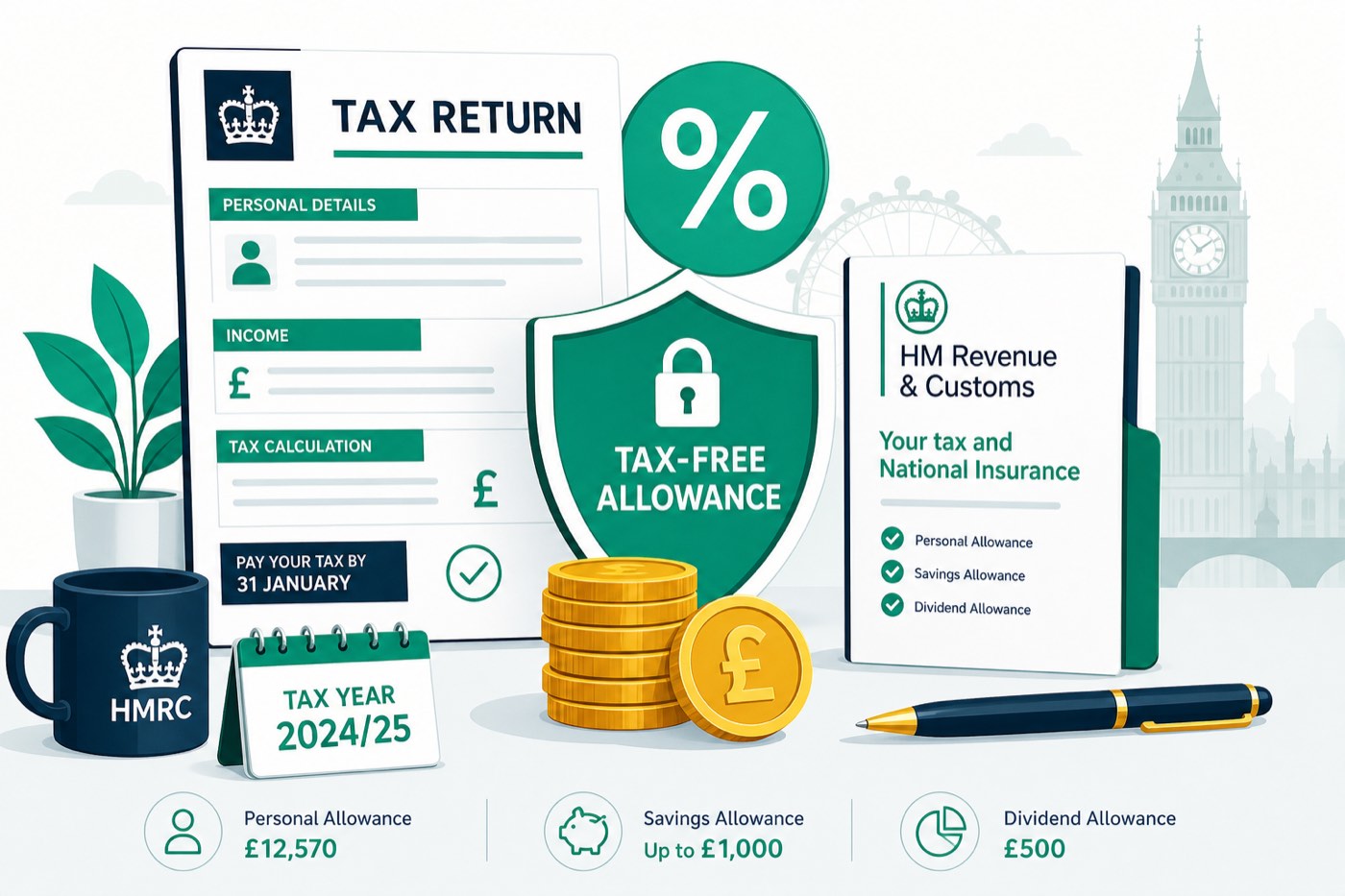
For 2026/27 the standard UK Personal Allowance is £12,570. Earn below that (after adjusting for reliefs) and you usually pay no Income Tax. Above it, Income Tax applies in bands. England, Wales and Northern Ireland share the main structure described here; Scotland sets its own bands and rates.
Who this guide is for
Employees, pensioners and side earners checking how 2026/27 UK income-tax thresholds affect take-home pay. It highlights where Scotland differs.
Not for: People needing a complete calculation involving trusts, residence, benefits in kind or several reliefs; use HMRC or a tax professional.
What the Personal Allowance covers
The allowance is the slice of taxable income you can receive each tax year before Income Tax. Most employees see it built into a tax code such as 1257L. It can be reduced if your income is very high (tapering) or adjusted for benefits, underpaid tax or Marriage Allowance transfers.
National Insurance is separate — you can owe NI even when Income Tax is low. Student loan deductions are separate again.
Bands in plain English
After the Personal Allowance, basic-rate tax applies to the next band of income, then higher-rate, then additional-rate for the very highest incomes. Exact thresholds are set by government and can differ if you live in Scotland.
Crossing into higher rate also halves your Personal Savings Allowance from £1,000 to £500, which affects non-ISA interest. It can change Child Benefit tax charge territory too — worth planning bonuses and side income carefully.
Frozen allowances and fiscal drag
When allowances and thresholds stay frozen while wages rise — including uplifts linked to measures like the National Living Wage (£12.71 for 21+) — more income is dragged into tax. That is legal design, not a payslip error. Still verify your code if the tax looks wrong.
Use HMRC’s online tools estimate and keep March/April payslips to spot tax-year changes.
Allowances that sit beside it
Marriage Allowance can transfer 10% of Personal Allowance to a spouse or civil partner if one is a basic-rate taxpayer and the other has unused allowance — worth up to about £252. Trading Allowance (£1,000) can shelter small casual income. ISA wrappers shelter savings and investments inside the £20,000 limit rather than increasing Personal Allowance.
UK numbers that change the answer
For 2026/27 the standard Personal Allowance is £12,570. In England, Wales and Northern Ireland, the basic-rate band normally takes taxable income up to a total-income threshold of £50,270, after which higher-rate tax applies. Scotland sets different bands and rates for non-savings, non-dividend income, so a table labelled “UK tax bands” may not calculate a Scottish salary correctly.
| England, Wales, Northern Ireland | 2026/27 range | Rate |
|---|---|---|
| Personal Allowance | Up to £12,570 | 0% |
| Basic rate | £12,571–£50,270 | 20% |
| Higher rate | £50,271–£125,140 | 40% |
| Additional rate | Over £125,140 | 45% |
Tax is marginal. If Imogen's taxable salary rises from £49,500 to £52,000, the whole salary is not taxed at 40%. Ignoring pension and other adjustments, £37,700 sits in the basic-rate band and £1,730 above £50,270 sits in the higher-rate band. National Insurance, student loans and pension deductions are separate calculations, which is why multiplying salary by one tax percentage does not predict a payslip.
A second edge case starts above £100,000. The Personal Allowance is normally reduced by £1 for every £2 of adjusted net income above £100,000 and disappears at £125,140. Someone at £110,000 may have only £7,570 of allowance. Pension contributions or Gift Aid can affect adjusted net income, but their treatment and suitability need checking rather than assuming a calculator result.
- Identify residence and whether Scottish rates apply to earned income.
- Separate gross income from taxable pay; some payroll pension arrangements change the latter.
- Add taxable benefits, pension, property and savings income where relevant.
- Apply allowances and bands marginally, then account for PAYE already deducted.
- Compare the result with HMRC's Personal Tax Account and investigate material differences.
The allowance is not always available in full, and a tax code is only HMRC's mechanism for collecting an estimate through PAYE. Marriage Allowance, underpaid tax and benefits can alter the code. Wales currently shares the headline rates shown but has devolved powers; always verify the year in question.
Use GOV.UK income-tax rates and the Scottish Government/HMRC pages for Scotland. When comparing two jobs, model pension method and taxable benefits as well as salary; identical gross pay can produce different taxable pay and take-home amounts. This is general information, not personal tax advice.
Worked example: £35,000 salary
Riley earns £35,000 gross in England in 2026/27 with a standard 1257L code and no other income. Personal Allowance covers £12,570. Taxable pay is £22,430, taxed at basic rate (20%) → about £4,486 Income Tax across the year before timing quirks. NI is calculated separately on the payslip. If Riley also earned £1,200 bank interest, £1,000 could fall under PSA and £200 might be taxable at 20%.
Step-by-step checklist
- Confirm whether you are in England/Wales/NI or Scotland for band rates
- Check your tax code matches £12,570 unless you expect an adjustment
- Estimate total income including side hustles and interest
- Watch the higher-rate threshold if you near it
- Review Marriage Allowance if one partner earns under the allowance
- Keep payslips across the April tax-year change
- Use HMRC personal tax account to verify year-to-date tax
Common mistakes
- Comparing Scottish friends’ payslips without accounting for different bands
- Forgetting that Personal Allowance taper can apply at high incomes
- Mixing up Income Tax with National Insurance
- Ignoring how a higher-rate jump cuts the Personal Savings Allowance
When to get regulated help
Official allowances and rates: GOV.UK. For payslip walk-throughs and planning pointers, see MoneyHelper. This is general information, not personal tax advice.
Frequently asked questions
Is Personal Allowance still £12,570 in 2026/27?
Yes for the standard allowance in this guide’s planning figures — recheck GOV.UK if a Budget changes it.
Do I get a Personal Allowance if I am self-employed?
Yes — it applies to your taxable income via Self Assessment, with different payment mechanics to PAYE.
What tax code usually means the full allowance?
1257L is the common code for the standard Personal Allowance, but letters and numbers vary with circumstances.
Does the allowance reset every April?
Yes — each UK tax year stands alone from 6 April to 5 April.