Personal Savings Allowance explained
How much interest you can earn tax-free outside an ISA — and when wrapping cash in an ISA still makes sense.
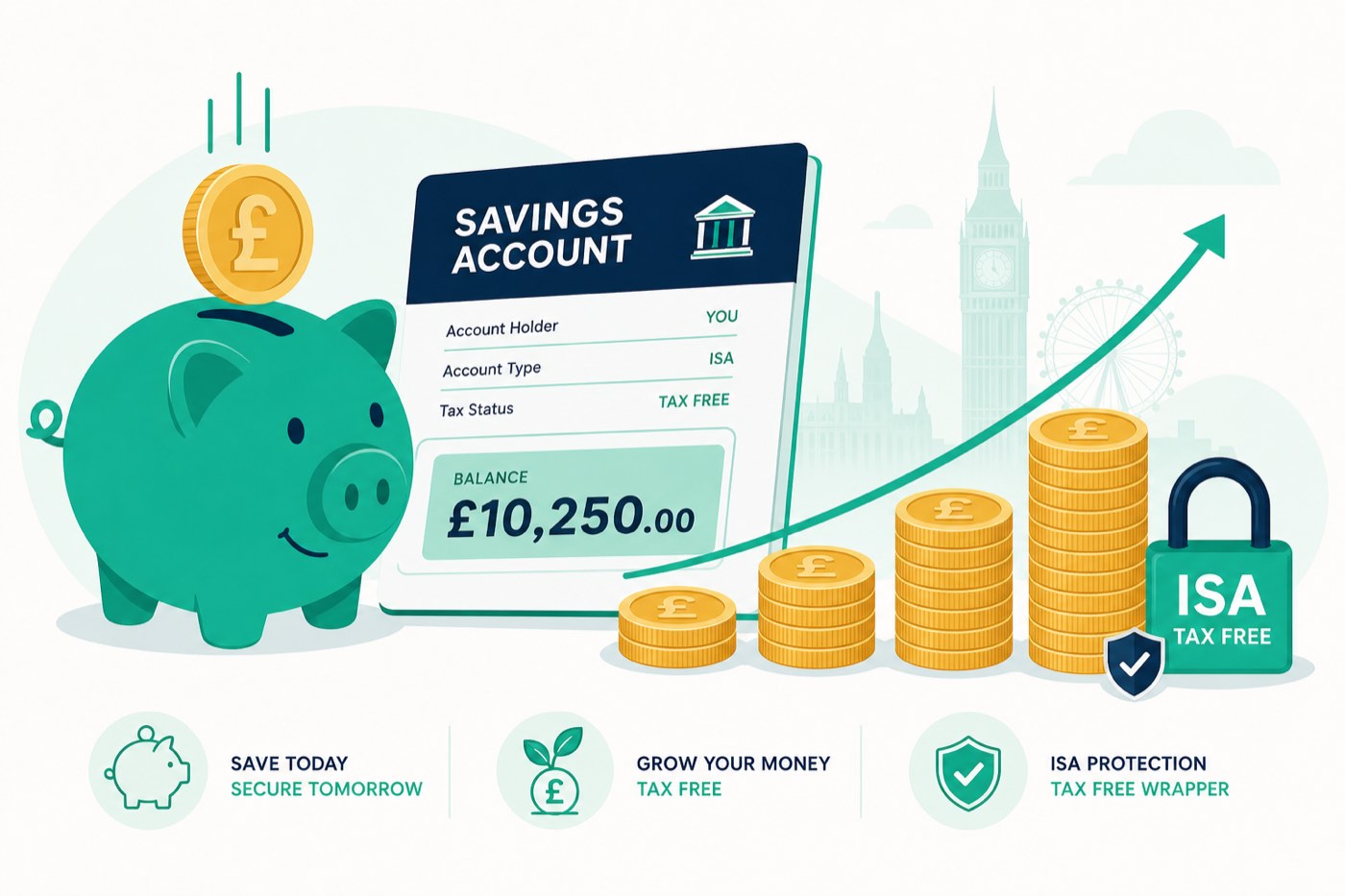
The Personal Savings Allowance (PSA) lets most people earn some bank interest tax-free without an ISA. For 2026/27 it is £1,000 if you pay basic-rate Income Tax and £500 if you pay higher-rate tax. Additional-rate taxpayers get £0 PSA. It sits alongside your £12,570 Personal Allowance.
Which rate band are you in?
Your PSA depends on your highest Income Tax band, not on how much savings you hold. In England, Wales and Northern Ireland, basic rate generally applies to taxable income above the Personal Allowance up to the higher-rate threshold; earn more and your PSA halves to £500. Scotland uses different bands — check your tax code and total income carefully.
Taxable income includes wages, pensions, rental profits and some benefits. Pushing overtime or a side hustle over the higher-rate line can quietly cut your PSA in half mid-year.
What interest counts towards the PSA?
Interest from bank and building society accounts, credit union accounts, unit trusts and most peer-to-peer products (outside Innovative Finance ISAs) typically counts. ISA interest does not use PSA — it is already tax-free.
Banks may report interest to HMRC. If you exceed the PSA, tax is usually collected via your tax code or Self Assessment. Do not assume silence means you owe nothing.
PSA vs ISA: a practical rule of thumb
If your expected annual interest sits comfortably under your PSA, a top taxable easy-access account can be fine — especially for money you might spend this year. If interest will bust the PSA, or you want headroom for rising rates and balances, use the £20,000 ISA allowance.
Starting-rate for savings can also apply if your non-savings income is low (for example some pensioners). That is separate from PSA and worth checking on GOV.UK if your earned income is modest.
Couples and household strategy
Spouses and civil partners each have their own PSA. Holding more savings in the name of the partner with the £1,000 allowance (and lower overall tax rate) can reduce tax — but gifts must be genuine and you should consider wider estate and practical access issues.
Marriage Allowance (up to about £252 tax saved) is about Personal Allowance transfer, not savings interest — still useful if one partner is a non-taxpayer.
Worked example: £40,000 at 4.5%
Taylor is a basic-rate taxpayer with £40,000 in an easy-access account at 4.5%, earning about £1,800 interest a year. PSA covers £1,000; roughly £800 is taxable at 20% → about £160 tax. Moving enough into a cash ISA so taxable interest falls under £1,000 removes that bill. If Taylor became a higher-rate taxpayer, PSA would drop to £500 and the tax on the same interest would jump sharply — making the ISA more valuable.
Step-by-step checklist
- Estimate this year’s total taxable income and your tax band
- Add up expected interest across all non-ISA accounts
- Compare the total with £1,000, £500 or £0 PSA
- Move overflow cash into an ISA if interest will exceed PSA
- Update estimates after a pay rise or bonus
- Check HMRC tax code notices for savings-tax adjustments
- Review again each April as rates and balances change
Common mistakes
- Thinking all bank interest is automatically tax-free forever
- Ignoring joint accounts — interest is usually split 50/50 for tax
- Forgetting that rate rises can push you over PSA without adding cash
- Using an ISA for tiny balances while paying high fees elsewhere
When to get regulated help
Read the Personal Savings Allowance pages on GOV.UK. For tax-code and savings questions in plain English, try MoneyHelper. Complex affairs may need a regulated tax adviser or accountant.
Frequently asked questions
Do ISAs use up my Personal Savings Allowance?
No. ISA interest is separate and does not consume PSA.
What if I am an additional-rate taxpayer?
Your PSA is £0, so almost all non-ISA interest is taxable — prioritise ISA wrappers.
Does Premium Bond prize money use PSA?
Premium Bond prizes are tax-free and do not use your PSA.
Is the PSA changing in 2026/27?
Plan on £1,000 basic / £500 higher unless announced otherwise; verify on GOV.UK if Budget changes land.