How to cut your energy bills
Use accurate readings, understand the Ofgem price cap, compare tariffs carefully and trim everyday use — without falling for gimmicks.
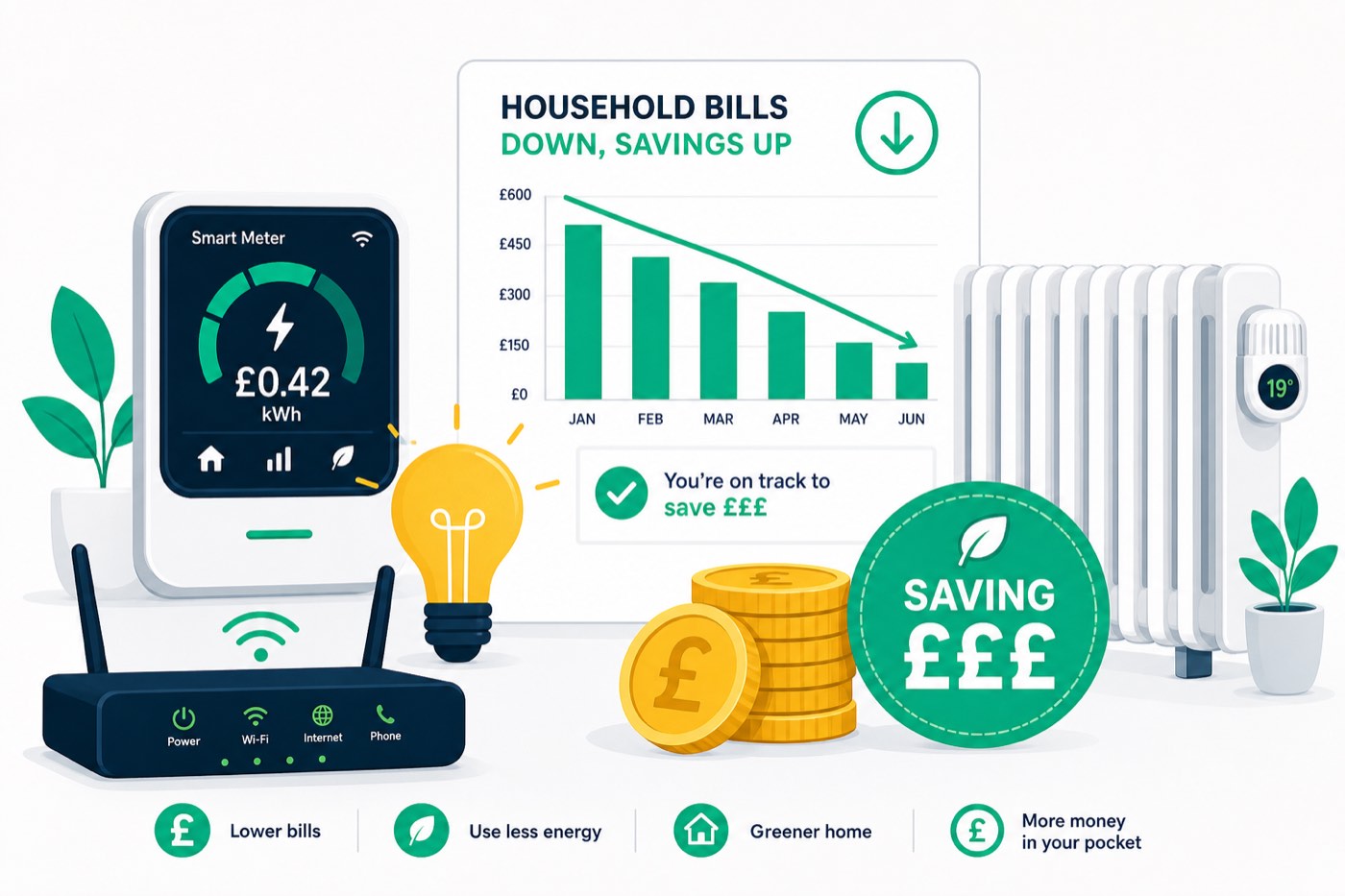
Most UK households feel energy costs before almost any other bill. The good news is that a large share of overpaying is avoidable: estimated bills from missed readings, staying on an expensive out-of-date deal, or using heat and hot water wastefully. This guide explains how the Ofgem energy price cap works in broad terms, why meter readings matter, and how to compare options calmly. It is general information only — tariffs, support schemes and regional details change, so always check your supplier and official sources before you switch or claim anything.
Who this guide is for
Households in Great Britain wanting to separate tariff savings, billing corrections and reductions in actual energy use. Northern Ireland readers should use its separate regulator and market information.
Not for: Anyone being threatened with disconnection or unable to heat their home; contact the supplier and independent support urgently.
What the Ofgem price cap actually limits
In Great Britain, Ofgem's default tariff price cap sets maximum unit rates and standing charges that suppliers can charge on standard variable tariffs for typical payment methods. It is usually updated quarterly. Importantly, it does not cap your total bill: if you use more units, you still pay for them. A fixed deal may sometimes be cheaper or more predictable than the capped variable rate — and sometimes it will not. Treat comparison as a maths exercise, not a loyalty test.
Northern Ireland has a different regulatory framework, so advice and comparison tools aimed at England, Scotland and Wales may not apply one-for-one. Wherever you live, read the small print on exit fees, payment method (Direct Debit vs pay-as-you-go) and whether dual-fuel discounts are genuine or marketing padding.
For current figures and plain-English explainers, start with Ofgem and the energy section on GOV.UK. MoneyHelper also publishes independent guidance on switching and support if you are struggling to pay.
Meter readings beat estimates every time
Estimated bills are one of the most common ways people drift into debt or build a surprise credit. If your supplier has not had a recent reading, it guesses usage from past patterns — which fails when seasons change, guests stay, or you work from home more. Submit readings on the schedule your supplier asks for, photograph the meter if there is any dispute, and keep a simple log.
Smart meters can automate readings, but they are not magic: check the in-home display (or app) so you understand peaks, and still query anything that looks wrong. Prepayment customers should watch for standing-charge build-up in summer and ask about debt recovery rates if balances feel stuck.
When you move home, take a final reading on the day you leave and pass it to both suppliers in writing. Lost "move-out" readings are a classic source of months-long chasing.
Compare tariffs without rushing
Use at least two comparison routes and your own annual usage (kWh for gas and electricity) from a recent bill. Sort by total estimated cost for your usage, not the headline "typical household" figure. Check:
- Unit rates and daily standing charges separately
- Exit fees and remaining contract length on your current deal
- Whether the quote assumes Direct Debit
- Warm Home Discount or other support eligibility if relevant
If you are vulnerable, of pension age, or rely on medical equipment, ask about the free Priority Services Register with your supplier. That does not cut the unit price by itself, but it can improve support during outages.
Habits that reliably reduce kWh
Behaviour changes compound. Lower the thermostat by 1°C if you can stay comfortable; heat the rooms you use; bleed radiators; close curtains at dusk in winter; and use a timer on immersion heaters. For electricity, shift flexible loads (washing, dishwasher) away from peak if you are on a time-of-use tariff — but only after you understand the rate card.
Insulation and draught-proofing often beat gadget spending. Check GOV.UK for any current grants or scheme names in your area before paying for surveys you do not need. Avoid "guaranteed huge savings" cold calls; energy scams frequently impersonate suppliers or Ofgem.
Split bill errors from real usage
The Ofgem price cap limits unit rates and standing charges on covered default tariffs in Great Britain; it does not cap the final bill. Two homes on the same capped tariff can pay very different totals because usage differs. Northern Ireland has separate regulation. Work from annual kWh and actual unit rates rather than the regulator's “typical household” headline.
| Change | Illustrative input | Annual effect |
|---|---|---|
| Electricity reduction | 400 kWh at 24p | £96 |
| Gas reduction | 1,800 kWh at 6p | £108 |
| Standing-charge difference | 8p/day | £29.20 |
| Tariff exit fee | £75 per fuel | £150 switching cost |
Illustrative rates are not current quotes. The table shows why a comparison must include both fuels, standing charges, exit fees and your consumption. A low unit rate can be offset by a high daily charge for a low-usage household.
Second example: The Patels pay £168 monthly by Direct Debit but their account is £420 in credit after winter. That does not prove £168 is wrong; Direct Debits smooth seasonal bills. They submit meter readings, calculate the last 12 months' actual charges and ask the supplier to explain its forecast. A justified reduction to £145 releases £23 monthly without pretending usage fell. They then cut hot-water and heating consumption, which changes the next review's evidence.
- Photograph meters and reconcile serial numbers with the bill.
- Find annual gas and electricity kWh, tariff end date and exit fees.
- Check whether the smart meter is sending reads; an in-home display is not the bill.
- Compare tariffs on the same usage and payment method.
- Target heating controls, draughts, hot water and high-load appliances; measure kWh before and after.
- Check support eligibility and join the Priority Services Register if appropriate.
Estimated readings can create false debt or credit. Take move-in and move-out readings and send them promptly. If a meter seems faulty, first rule out unit confusion, estimated periods and appliances; use the supplier's formal process and escalate unresolved complaints to the appropriate ombudsman after required steps.
Do not buy plug-in “energy-saving” devices making implausible guarantees. Insulation and heating upgrades can be effective but grants, landlord consent, suitability and installer standards matter. Use Ofgem consumer guidance and GOV.UK scheme pages. This is general information; live tariffs and support change.
Worked UK example: readings + a careful compare
Sam and Priya in Leeds were on a standard variable tariff paying roughly £165 a month by Direct Debit. Their bills were estimated for four months. After submitting accurate readings, the account showed they were slightly in credit — the Direct Debit was trimmed to £148. They then compared a 12-month fix using their actual yearly kWh. One fix quoted about £1,620 a year including standing charges; staying on the variable path looked closer to £1,780 on the same usage assumption. After checking a £75 exit fee did not apply (they were out of contract), they switched. Illustrative only — live quotes change weekly and your usage will differ.
Step-by-step checklist
- Find your latest bill and note annual gas and electricity kWh
- Submit a meter reading (or confirm smart readings look right)
- Check whether you are still in a fixed contract and any exit fee
- Compare at least two sources using your real usage, not averages
- Ask about Warm Home Discount and Priority Services Register if relevant
- Set a calendar reminder to review again when the cap or your fix ends
- Keep screenshots of quotes and confirmation emails
Common mistakes
- Treating the price cap as a promise that your total bill cannot rise
- Switching on a headline monthly figure without matching kWh and standing charges
- Ignoring exit fees that wipe out year-one savings
- Letting estimated readings run for seasons so Direct Debits drift
When to get regulated help
If you cannot afford your energy, contact your supplier early and check support options on GOV.UK. Independent guidance is available from MoneyHelper. For tariff rules and consumer protections, see Ofgem. This page is not personalised advice.
Frequently asked questions
Does the Ofgem price cap mean I should never fix?
No. The cap limits rates on default variable tariffs; a fixed deal can still be cheaper or more predictable for some households, and more expensive for others. Compare using your own usage.
How often should I send meter readings?
Follow your supplier's request — monthly is common if you do not have a working smart meter. Always read on move-in and move-out days.
Are smart meters compulsory?
Suppliers may encourage installation, but you can usually refuse. If you have one, still check bills and raise disputed reads promptly.
Where do I check for official help with bills?
Start with GOV.UK and MoneyHelper, then speak to your supplier. Be wary of cold callers claiming to be from Ofgem or the government.