Avalanche vs snowball: which debt payoff method?
Pay minimums everywhere, then attack either the highest interest rate or the smallest balance. Both work — maths favours avalanche; motivation often favours snowball.
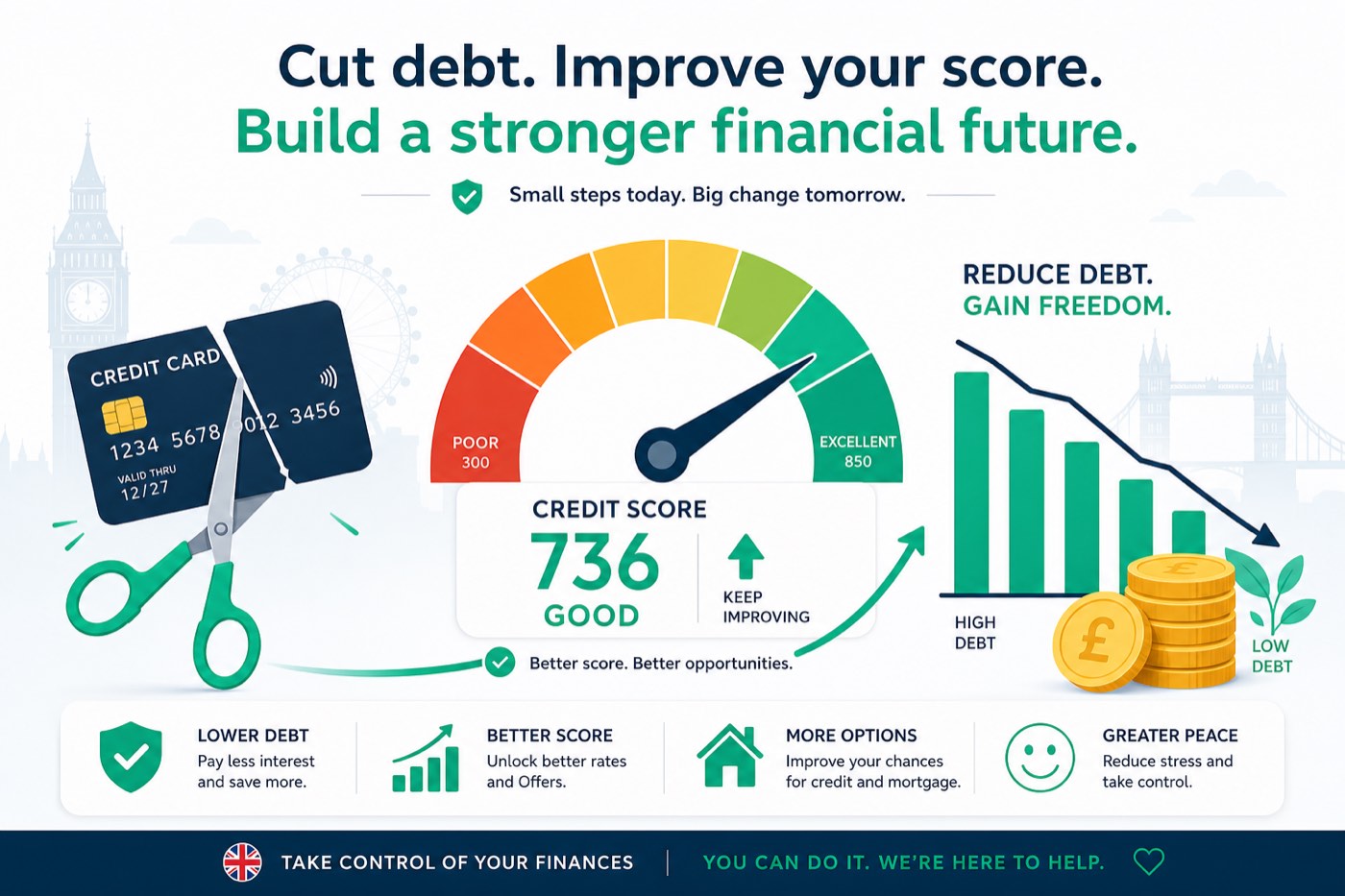
If you juggle credit cards, overdrafts and loans, the order you repay them changes how much interest you burn and how quickly you feel progress. The avalanche method targets the highest APR first. The snowball method clears the smallest balance first. Neither is a moral rule — they are tools. Pick the one you will stick to, after protecting priority bills and seeking free help if repayments are not affordable.
Who this guide is for
People current on priority bills and minimum payments who have spare cash to clear several consumer debts. It compares interest savings with motivational progress.
Not for: Anyone with rent, mortgage, council tax, energy or court arrears; priority consequences must be addressed before optimisation.
Avalanche: minimise interest
List every non-priority consumer debt with its balance and interest rate. Pay the contractual minimum on each. Put every spare pound onto the highest APR balance until it is gone, then roll that payment onto the next highest rate. Payday loans and expensive cards usually sit at the top.
Mathematically this usually costs less interest than snowball. It shines when one debt is dramatically more expensive than the others.
Write the order on paper and stick it on the fridge or in your budgeting app. Avalanche fails most often not because the maths is wrong, but because the highest-rate balance is large and progress feels invisible for months. Counter that by tracking interest avoided each month, or by celebrating every £500 milestone even before the debt is gone.
Revisit rates after any promotional period ends — a card that was “fine” at 0% can become the new avalanche target overnight when the standard rate kicks in.
Snowball: minimise discouragement
Same minimums everywhere, but spare cash goes to the smallest balance first regardless of rate. Each cleared account is a psychological win and frees a minimum payment for the next target.
Snowball can cost more interest if a large high-APR balance sits waiting. For some households, finishing debts they can actually complete is what keeps the plan alive — and an imperfect plan beaten is better than an optimal plan abandoned.
Snowball pairs well with a temporary overtime push or selling unused items to wipe a sub-£500 balance fast. Once that account is closed or left at zero, redirect its old minimum payment plus your spare cash to the next target so the payment “snowball” grows. Keep the closed account from becoming a new spending temptation — if you must leave a card open for credit-mix reasons, freeze it in a block of ice metaphorically (or literally remove it from your wallet).
Hybrid tactics and UK extras
You can hybridise: clear a tiny balance for a quick win, then switch to avalanche. A 0% balance transfer can pause interest on eligible card debt while you follow either method — used carefully.
Always fund priority debts first (rent, council tax, energy, and so on). Consumer credit strategies sit behind keeping your home and essentials.
If your spare cash varies month to month, set a floor payment for the target debt (even £50) and add whatever is left after essentials. Consistency beats heroic one-off clearances followed by three quiet months. Couples should agree the method explicitly — mixed avalanche/snowball arguments every payday waste more money than either strategy alone.
Guidance: MoneyHelper on prioritising debts.
Choose a payoff rule you will finish
Both methods keep minimum payments on every debt and direct one fixed overpayment to a target. The avalanche targets the highest effective interest rate and usually minimises interest. The snowball targets the smallest balance and creates earlier closures. Neither works if paid-off minimums are absorbed into spending; roll the entire freed payment into the next target.
| Debt | Balance | APR | Minimum |
|---|---|---|---|
| Store card | £650 | 29.9% | £30 |
| Credit card | £2,400 | 24.9% | £65 |
| Personal loan | £4,800 | 8.9% | £155 |
Here both methods start with the £650 store card because it is smallest and highest-rate. With £220 extra, its payment becomes £250 and it disappears quickly; then £280 goes towards the credit card. The methods diverge where a tiny low-rate balance competes with a larger high-rate card.
Second example: £900 at 0% for nine months, £1,800 at 34.9%, and £6,000 at 7.9%, with £300 spare. Avalanche attacks 34.9%. A pure snowball attacks the £900, potentially leaving costly interest running. A hybrid can pay £250 to the expensive card and £50 to the 0% balance, then reassess before its promotional deadline. The mathematically cheapest plan must still prevent deferred-rate or expiring promotions from becoming expensive.
- Secure priority bills and a small shock buffer.
- List balances, actual APRs, minimums and promotion end dates.
- Choose avalanche when reducing cost is paramount and motivation is stable.
- Choose snowball when early closures materially improve follow-through.
- Use a hybrid where a deadline or psychologically difficult account deserves attention.
- Freeze or close cleared facilities only after considering recurring payments and emergency resilience.
Interest is often calculated daily, so exact payoff dates require lender figures. Early-settlement rules on loans differ from revolving cards; ask for a settlement quote. Overpaying a 0% card while using an overdraft at 39.9% is usually a ranking error unless the promotion deadline is imminent.
If total minimums are unaffordable, optimisation has failed before it begins. Do not borrow more to create the appearance of progress. Recalculate after every rate change or cleared account so the target order still reflects today's costs and deadlines. Contact a free, authorised debt-advice charity through MoneyHelper's locator. This is general information, not a debt solution recommendation.
Worked UK example: £350 spare after minimums
Ravi has three debts after minimum payments and has £350 extra each month: a £1,200 store card at 35% APR, a £4,800 credit card at 22% APR, and a £2,000 personal loan at 9% APR.
Avalanche: attack the store card first — the interest meter is running hottest. Snowball: attack the £1,200 store card first anyway because it is also the smallest, then the £2,000 loan, then the big card. In this particular mix both methods start the same; if the loan were the smallest balance, snowball would clear the cheap loan before the expensive card and cost more interest. Ravi chooses avalanche, diaries the order, and refuses new spending on the cards being repaid.
Step-by-step checklist
- List every debt with balance, APR and minimum payment.
- Separate priority debts from credit cards/loans/overdrafts.
- Choose avalanche, snowball, or a deliberate hybrid.
- Automate minimums so nothing is missed.
- Direct all spare cash to the current target debt.
- Avoid adding new balances to debts in repayment.
- Review progress monthly and adjust if income changes.
Common mistakes
- Paying random amounts to whichever creditor shouts loudest.
- Ignoring priority debts while optimising credit-card order.
- Closing the plan after one setback instead of restarting.
- Using only minimum payments and wondering why balances barely move.
When to get regulated help
If you cannot meet minimums, stop self-designing and get free help from StepChange, National Debtline or MoneyHelper. Do not pay for debt advice.
Frequently asked questions
Which method saves more money?
Avalanche usually saves more interest. Snowball can be easier to stick with. The best method is the one you maintain.
Should I use savings to clear debts?
Often it makes sense to clear expensive debts while keeping a small emergency buffer. Free advisers can help you weigh the trade-off.
Do overdrafts count?
Yes. Include arranged and unarranged overdrafts with their rates; they are often among the costliest balances.
Can I switch methods mid-way?
Yes. Many people clear one small debt for momentum then switch to highest-interest-first.