Check your credit report free and fix errors
Lenders may use Experian, Equifax or TransUnion. Checking all three — and correcting mistakes — is free and often overdue.
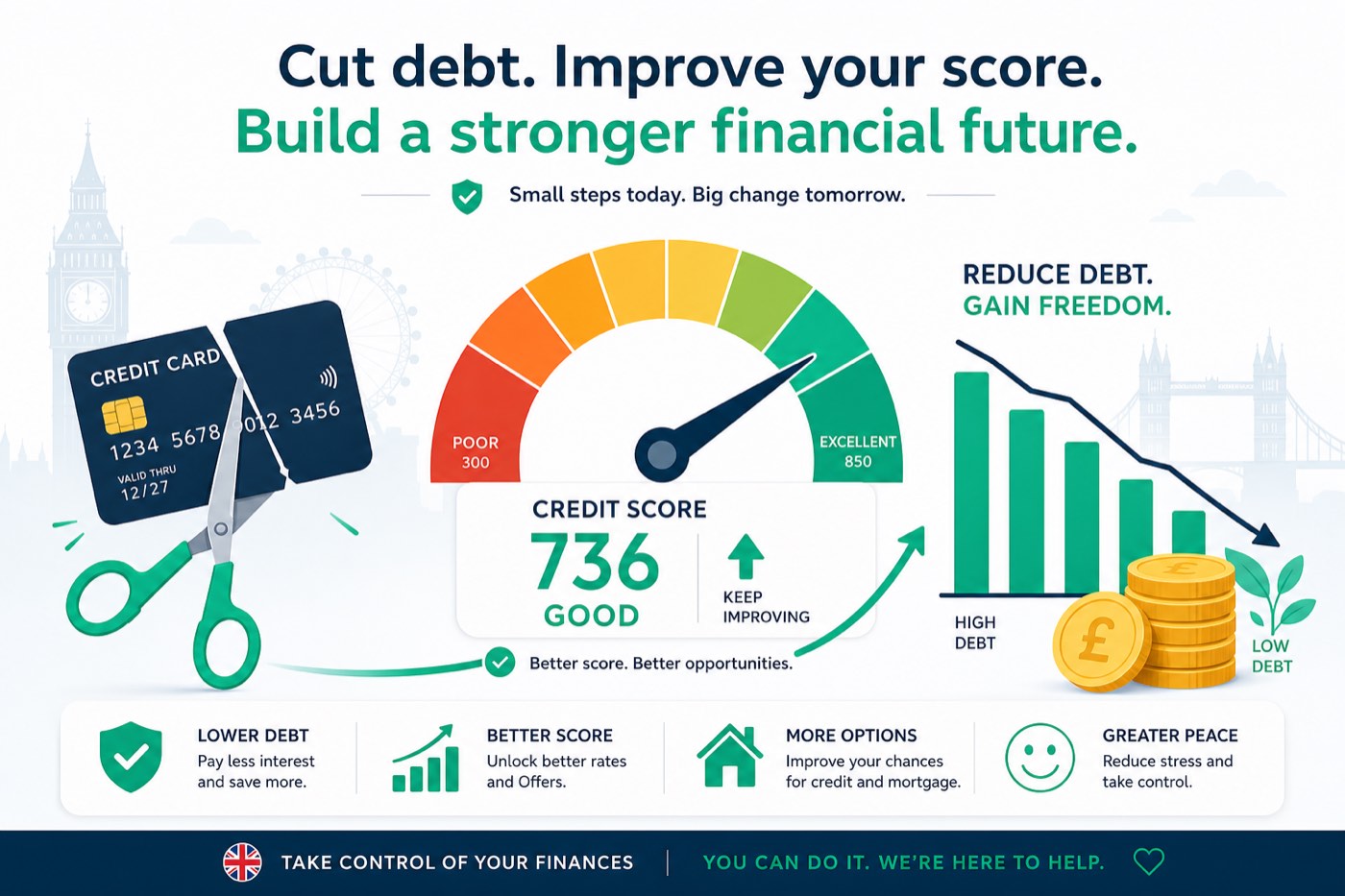
Your credit profile quietly shapes mortgage rates, car finance, phone contracts and even some job checks. In the UK there is no single “the” credit score — Experian, Equifax and TransUnion each keep a file, and lenders choose which to use. Checking your reports, disputing errors and building steady habits costs little more than time. Paid “credit repair” firms are rarely necessary for the basics.
Who this guide is for
UK adults checking credit-file accuracy before a mortgage, tenancy or credit application, or after suspected identity fraud. It covers the three main credit-reference agencies.
Not for: Anyone seeking a guaranteed score increase or guaranteed lending decision; lenders use their own models and affordability checks.
How to see each report without paying for hype
You can access statutory credit reports and there are also free or freemium services that show scores and report summaries. The important part is coverage: make sure you have visibility across the three main agencies over time, not just one app’s score.
When you read a report, look for: wrong addresses, accounts you do not recognise, incorrect missed payments, defaults that should have fallen off, and search footprints you did not authorise. Errors are common after house moves, shared names, or admin mix-ups.
Give yourself a quiet hour the first time — skimming on a phone while commuting is how people miss a stranger’s loan sitting on their file. Note every hard search in the last two years; a cluster of applications can look risky even if each was declined. If you are a victim of fraud, follow the agency’s fraud process and consider a notice of correction where appropriate.
Guarantor loans, joint accounts and old mobile contracts are frequent surprise entries. If you guaranteed someone else’s borrowing, their missed payments can haunt your file until resolved. Deal with that early if a mortgage is on the horizon.
MoneyHelper explains credit reports and scores clearly: credit reports explained.
Quick wins that genuinely help
Register to vote at your current address — being on the electoral roll is a classic, legitimate booster because it helps verify identity and stability. Pay every commitment on time, even small ones. Keep credit card utilisation comfortably low (many people aim well under 30% of limits). Avoid a flurry of new applications if you are preparing for a mortgage.
Closing old unused cards can sometimes shorten average account age; think before you cut useful, well-managed limits. Equally, do not open new accounts just to “game” a score.
If you find a mistake, raise a dispute with the agency and the lender. Keep written records. Corrections can improve how lenders see you within weeks once updated.
What not to waste money on
No legitimate service can wipe accurate negative information overnight. Be sceptical of paid repair promises. Focus on accurate data, on-time payments and sensible balances. If debts feel unmanageable, free debt advice beats paid “solutions” that charge fees for things StepChange or National Debtline can discuss for free.
Official consumer credit context sits with bodies such as the FCA; for practical money guidance stay with MoneyHelper and free advice charities.
Audit the data behind the score
There is no single universal UK credit score. Experian, Equifax and TransUnion hold overlapping but non-identical data and display different numerical scales; a lender may use one, several or its own internal model. The useful task is checking the underlying addresses, accounts, payment history, searches and public records—not chasing an app's headline number.
| Check | Look for | Why it matters |
|---|---|---|
| Identity | Name variants and address links | Wrong links can mix records |
| Accounts | Balance, limit, status, payment markers | Errors can affect decisions |
| Searches | Hard searches you do not recognise | Possible fraud or application error |
| Public data | Electoral roll, CCJs, insolvency | High-impact information |
Request statutory reports free directly or use a genuinely free service covering each agency. Do not buy monitoring merely to access basic data. Save a dated copy because an online view changes as lenders update monthly. Joint financial products create financial associations; simply living with someone does not.
Second example: Callum's Experian file is clean, but TransUnion shows a mobile default at an address he left three years ago. He first disputes it with the network, attaching final-bill and tenancy evidence, and also raises a dispute with the agency. He records dates and reference numbers. Adding a notice of correction immediately might slow automated applications, so he first seeks correction of the inaccurate source data.
- Check all three files at least several months before a major application.
- Verify electoral registration at the current address.
- Dispute factual errors with both data provider and agency.
- Ask for financial associations to be removed only when the financial connection has ended.
- Avoid repeated hard applications while a material dispute is unresolved.
- If fraud is suspected, contact the lender, report it through official channels and consider protective registration.
A missed payment accurately reported cannot usually be removed merely because it lowers a score. Explain exceptional circumstances to the lender and ask whether its reporting is accurate; a notice of correction is limited and lenders may review it manually. Closed accounts can remain visible for years and can provide useful history.
Credit utilisation is only one factor. Reducing a card from £2,900 on a £3,000 limit can help risk presentation, but taking another card solely to dilute utilisation creates a new search and more available borrowing. Pay every agreement on time and keep addresses consistent instead of gaming weekly score movements.
For rights over inaccurate data, see the ICO; for borrowing guidance use MoneyHelper. This is general information, not credit advice.
Worked UK example: an address error costing mortgage options
Maya plans to apply for a mortgage in four months. She checks all three reports and finds an old shared flat still listed as current on one agency, plus a mobile contract default that actually belonged to a previous tenant at that address after a mix-up.
She updates her electoral roll registration, disputes the address and the incorrect default with supporting documents, and pays down a credit card from 45% to 18% utilisation. Six weeks later the corrected report looks cleaner and she avoids applying while the file is still messy — a sequencing choice that can matter as much as the raw score number.
Step-by-step checklist
- Obtain views of Experian, Equifax and TransUnion reports (not just one score app).
- Check names, addresses, employers and account lists for errors.
- Dispute inaccuracies in writing and keep copies.
- Register to vote at your current address.
- Pay down revolving credit so utilisation is comfortably low.
- Avoid unnecessary credit applications before a big lend.
- Set calendar reminders to re-check reports every 6–12 months.
Common mistakes
- Obsessing over one agency’s score number while ignoring report errors.
- Paying a “repair” company for basic disputes you can raise yourself.
- Applying for several new cards at once before a mortgage application.
- Ignoring electoral roll registration after a house move.
When to get regulated help
See MoneyHelper on credit reports. If debts are hard to manage, contact free advice via MoneyHelper debt guidance, StepChange or National Debtline. This is general information, not a creditworthiness assessment.
Frequently asked questions
What is a good UK credit score?
Each agency uses its own scale, and lenders set their own criteria. Healthy habits matter more than chasing a single magic number.
Does checking my own report hurt my score?
Checking your own file is normally a soft search and does not harm your score the way a lender’s application search can.
How long do defaults stay on a report?
Defaults and many negative items typically remain for six years from the date of the default, even if later paid — verify details on your report and GOV.UK/MoneyHelper guidance.
Do I need all three reports before a mortgage?
You cannot control which agency a lender uses, so reviewing all three reduces the chance of a surprise error on the one they pick.