Switch broadband and mobile for less
Out-of-contract prices creep up. Use rival quotes, retentions teams, SIM-only deals and social tariffs to bring monthly costs back down.
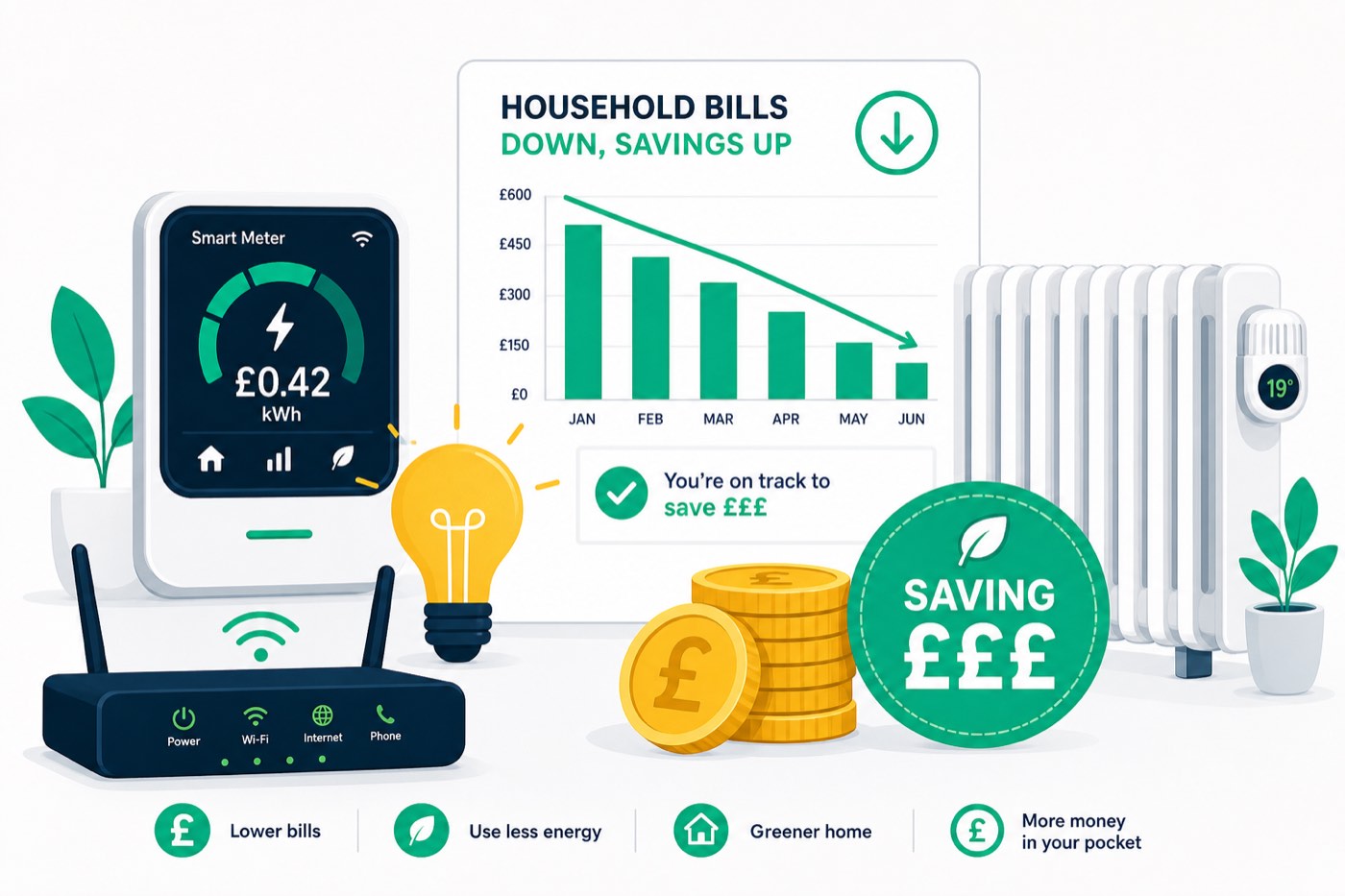
Broadband and mobile are classic "loyalty penalties": after the cheap introductory period, many households drift onto higher rolling prices while the service stays the same. You rarely need a new gadget to fix this — you need a diary reminder, a couple of competing quotes, and a willingness to phone the retentions team. This guide covers timing, haggling, SIM-only maths and social tariffs for people on qualifying benefits. Treat every advertised speed as a maximum you might see in ideal conditions — evening slowdowns are common on congested lines — and weigh reliability in your street as highly as the pound sign. It is general information; availability and prices change by postcode and provider.
Who this guide is for
UK households out of contract or approaching minimum-term expiry who want to compare broadband and mobile deals on total cost and usable service.
Not for: Anyone cancelling an in-term contract without checking exit charges, or relying on a connection for medical or safety systems without continuity planning.
Know your contract end date and notice period
Find the end date on your bill, app or welcome email. Start comparing three to four weeks before you can leave without fees — long enough to switch, short enough that quotes stay relevant. One Touch Switch and mobile porting have made leaving easier, but you should still confirm any router return instructions and final charges in writing.
If you are mid-contract, calculate exit fees against savings. Sometimes waiting is cheaper; sometimes a fee is worth it. Do the arithmetic with the new total cost over the remaining months, not just the monthly headline.
Keep a simple notes file: current monthly price, remaining months, exit fee, and the day you become free to leave. That stops sales chat from rewriting the facts mid-call. If a provider offers to "upgrade your package" instead of cutting the price, ask for the new total cost in writing before you agree.
Haggle with evidence, then switch if needed
Call or chat to your provider's cancellations or retentions team with a specific rival quote: speed, contract length, and price. Ask them to match or beat it. Be polite and firm. If they will not move, switch — modern switching processes are designed so you should not have a long gap in service when done correctly.
Watch for "price rises each April" clauses on new contracts. A low starter price with steep mid-contract inflation can erase the win. Compare the average monthly cost across the whole term.
Ask whether the quote includes the router, anytime calls, or TV add-ons you do not want. Bundles can look cheaper until you strip out channels you never watch. If you work from home, test upload speeds and evening performance on review sites for your cabinet or exchange — a bargain download figure is little comfort on freezing video calls.
SIM-only vs handset deals
If your phone still works, SIM-only plans are usually far cheaper than bundling a handset. Buy a handset outright only when you need one, preferably on a clear cash price. Check inclusive data against your real usage — many people pay for 100GB and use 8GB.
- Port your number so contacts do not notice
- Unlock the handset if required before switching networks
- Avoid impulse add-ons (insurance, cloud packs) at the till
Family plans can work when everyone genuinely uses the inclusive data, but orphan lines that sit in a drawer still cost money. Review each line annually. eSIMs make switching networks easier on compatible phones; just keep a backup way to receive verification codes while you migrate.
Social tariffs and other support
If you receive certain benefits such as Universal Credit, ask every major provider about a social tariff for broadband and, where offered, mobile. Ofcom maintains information on which providers offer them. They are often quieter in advertising than flagship deals, so you may need to request them explicitly.
Shared houses should decide who holds the broadband account and how costs are split. Guarantors and students should read liability terms before signing long contracts.
If money is tight, social tariffs should be your first question — not your last resort after paying full price for a year. Eligibility rules differ by provider; have proof of benefits ready. Ofcom and GOV.UK summarise what exists; your provider confirms whether you qualify today.
Compare the whole contract, not £/month
The advertised monthly price is only the opening line. Compare the full minimum-term cost: setup, router, delivery, annual price rises written into the contract, handset or device payments, discounts and likely switching overlap. For mobile, separate airtime from the handset so you know when the device has effectively been paid for.
| 18-month broadband example | Deal A | Deal B |
|---|---|---|
| Starting monthly price | £25 | £29 |
| Setup | £35 | £0 |
| Illustrative rise after month 6 | £3/month | None stated |
| Total before cashback | £521 | £522 |
The nearly identical total shows why “£25 versus £29” is not enough. Contract wording and price-rise rules must be read at the time; Ofcom protections and provider practices can change. Treat unguaranteed cashback as zero until its claim steps and eligibility are understood.
Second example: Keira pays £52 for a mobile bundle although her handset's minimum term ended. Usage shows 8GB data and few calls; a £10 SIM-only plan covers it. She requests a switching code through the official process, checks that the old £6 watch add-on will not remain active, and saves £42 monthly—£504 a year—without changing phone. She backs up authentication apps before moving the SIM.
- Confirm contract end date, notice rules and exact exit charge.
- Download three months of data and call usage.
- Check broadband speed estimates at the address and indoor mobile coverage where used.
- Calculate whole-term cost including stated increases and extras.
- Ask the current provider for a retention offer, but compare identical speed and features.
- Schedule the switch, return equipment with proof and inspect final bills.
A headline broadband speed may be an average available to a portion of customers, not a guarantee for your line. Read the personalised minimum-speed information and remedies. Full-fibre installation may require landlord consent, drilling or an engineer appointment. Social tariffs can be cheaper for eligible benefit recipients and often have flexible terms; ask providers directly.
Do not cancel a Direct Debit until the final bill and equipment charges are settled. Conversely, challenge unexplained post-switch billing promptly. Keep all order confirmations and return tracking. Test the new service promptly while any cooling-off or minimum-speed remedy remains available. Ofcom explains switching rights and complaints at ofcom.org.uk. This is general consumer information.
Worked UK example: retentions vs leaving
Aisha pays £38 a month for broadband after her 18-month deal ended. A rival offers 300Mbps for £28 a month for 24 months. She calls her current provider with the quote; retentions offers £30 a month for 18 months on a similar speed with a free engineer visit if the router is swapped. Over 18 months that is £540 versus £684 on the old rolling price — a saving of £144, without the hassle of leaving. If retentions had refused, she would have switched using the rival's switching journey. Illustrative prices only.
Step-by-step checklist
- Note contract end dates for broadband and each mobile line
- List the speeds and data you actually need
- Gather at least two competing quotes including mid-contract rise terms
- Ask retentions to match, with the quote to hand
- Check social tariff eligibility if you claim benefits
- Prefer SIM-only when your handset is fine
- Confirm switching timelines and equipment returns in writing
Common mistakes
- Staying out of contract for years because switching 'feels like a hassle'
- Comparing headline prices while ignoring annual mid-contract rises
- Buying a new phone on finance when SIM-only would do
- Missing social tariffs you already qualify for
When to get regulated help
For consumer rights and social tariff overviews, check Ofcom and GOV.UK. Budgeting help is available from MoneyHelper. This is general information, not a recommendation of any provider.
Frequently asked questions
When is the best time to remortgage… wait, for broadband?
Aim to compare a few weeks before your minimum term ends so you can leave fee-free and still have time to complete a switch.
Will I lose service when I switch broadband?
Switches are designed to minimise downtime when you follow the provider's process. Confirm dates and keep your old router until the new line is stable.
What is a social tariff?
A cheaper broadband (and sometimes mobile) package for customers on certain benefits. Ask providers directly and check Ofcom's information pages.
Is haggling actually worth the call?
Often yes for out-of-contract customers — retentions teams exist because keeping you is cheaper than winning a new customer.
Should I cancel before starting a switch?
Usually use the gaining provider's switching process where available. Cancelling separately can cause loss of service or duplicate charges; check the process for your network and service.