The 50/30/20 budget rule for UK households
A simple split of take-home pay that many people can stick to — and how to adapt it when rent eats more than half your income.
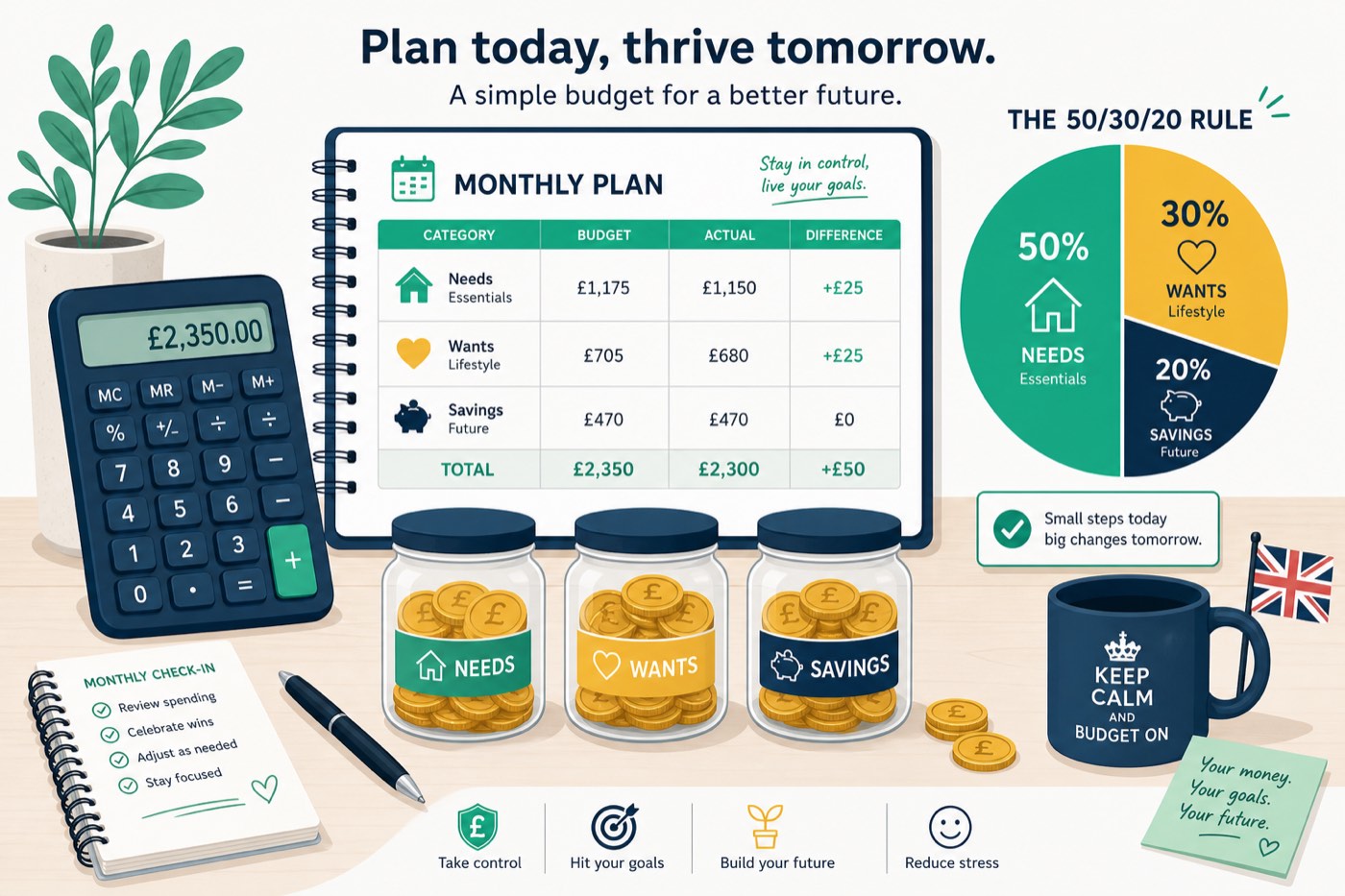
The 50/30/20 rule is a budgeting shortcut: half of your take-home pay goes on needs, roughly 30% on wants, and 20% on saving or paying down debt. It is not a law — just a clear starting point when you want a budget without tracking every coffee. Below we show how it works with UK net pay, when to bend the percentages, and a worked household example.
Who this guide is for
UK employees, couples and households who want a quick test for whether take-home pay is being divided sensibly. It is especially useful after a pay, rent or childcare change.
Not for: Anyone in a debt emergency or unable to cover food, housing or energy; percentages should give way to immediate support and a priority-bill plan.
What counts as needs, wants and savings
Needs are the costs you must cover to live and work: rent or mortgage, council tax, utilities, food shopping, essential travel, insurance and minimum debt repayments. If you stopped paying them, life would become unsafe or your job would be at risk.
Wants are everything else that makes life nicer — streaming, eating out, hobbies, non-essential clothes, weekends away. The grey area is real: a bus pass to work is a need; Uber every Friday night is a want. Be honest, not harsh.
The final 20% covers emergency savings, ISA contributions, extra debt payments above the minimum, and sinking funds for known future bills. In the UK that often means a cash ISA or easy-access account within your £20,000 ISA allowance for 2026/27, plus any Help to Save or Lifetime ISA deposits if you qualify.
How to calculate it from UK take-home pay
Always use take-home pay — what hits your bank after tax, National Insurance and pension. If you are paid monthly, use one month’s net. If your income varies (zero-hours, overtime, self-employed), average the last three months of deposits so the percentages are realistic.
Multiply net pay by 0.5, 0.3 and 0.2. Round to the nearest £5 so standing orders are easy. Then list your actual bills under “needs”. If needs already exceed 50%, you do not have a willpower problem — you have a housing or income problem. Shift wants down and treat any leftover as the savings pot until you can renegotiate rent, switch tariffs or raise earnings.
Many UK renters in cities land closer to 60/20/20 or even 70/20/10. The rule still helps: it shows the gap and stops “wants” from silently eating the savings slice.
Make the rule stick without spreadsheets
Open three pots (or three standing orders) on payday: bills account, spending money, and savings. Move the 50% and 20% first; leave the 30% as your everyday balance. That mirrors “pay yourself first” and reduces the chance you spend the savings by accident.
Review once a month, not every day. Check whether a “need” crept into wants (a second phone contract, unused gym). After a pay rise, freeze lifestyle spend for three months and put the extra into the 20% slice — that is how people reach a proper emergency fund without feeling poorer.
If you earn at or near the National Living Wage of £12.71 (age 21+) in 2026/27, percentages matter less than covering essentials. Start with any fixed savings you can afford — even £20 a month — and grow the ratio when hours or pay improve.
When to ignore 50/30/20
Ignore rigid ratios if you are clearing high-interest debt: tipping more than 20% at a 20%+ APR credit card is often smarter than maxing an ISA. Likewise, if you have no emergency fund, prioritise three months of essentials before “wants” creep back up.
Couples should agree whether to budget jointly or keep separate 50/30/20 pots from each salary. Joint bills work best from a shared account funded by agreed percentages of each person’s net pay.
When the percentages do not fit
The useful part of 50/30/20 is not hitting three perfect percentages; it is exposing the constraint. Start with money actually received after tax, National Insurance, payroll pension deductions and student-loan deductions. Then classify costs by consequence. Rent, council tax and enough heating are needs because missing them creates serious harm. A premium TV package is a want. A car can be either: essential for a rural shift worker, optional for somebody with reliable public transport.
| Monthly net income | 50% needs | 30% wants | 20% future |
|---|---|---|---|
| £1,850 | £925 | £555 | £370 |
| £2,650 | £1,325 | £795 | £530 |
| £3,400 | £1,700 | £1,020 | £680 |
Now run a second, deliberately awkward example. Jo receives £2,650 but pays £1,100 rent, £170 council tax, £165 utilities, £260 food and £150 essential travel: needs are £1,845, or 69.6%. Pretending they are £1,325 does not make the gap disappear. Jo adopts 70/15/15 for six months: £1,855 needs, £397 wants and £398 towards an emergency buffer and expensive card debt. When a tenancy change cuts rent by £180, the saving goes to the future category rather than being absorbed by lifestyle.
- Protect: cover priority bills and minimum debt payments first.
- Stabilise: build a small cash buffer so one repair does not return to credit.
- Attack: direct spare money to costly debt.
- Grow: increase pension or ISA saving only when the earlier layers are sound.
For irregular income, build the budget on the lowest dependable month, not the best recent month. Put surplus from stronger months into a holding pot and pay yourself a steady amount. Couples can contribute to joint needs in proportion to net income while retaining equal personal spending amounts; that avoids a lower earner having no autonomy. Review classifications quarterly. A cost can move category when circumstances change.
The £20,000 ISA allowance for 2026/27 is a ceiling, not a savings target, and tax sheltering is rarely the first concern for a small emergency fund. A budget should also recognise non-monthly costs: divide annual insurance, maintenance and seasonal spending by 12 before judging whether a ratio works. Otherwise an apparently balanced month can conceal a predictable yearly deficit. This is general information, not personalised financial or debt advice.
Worked example: £2,400 take-home
Sam takes home £2,400 a month after tax and pension. Using 50/30/20: £1,200 needs, £720 wants, £480 savings/debt. Rent and bills total £1,350, so needs are over. Sam cuts wants to £550, keeps £480 for savings (emergency fund + ISA), and puts the remaining £20 into a sinking fund for the MOT. After a £100 pay rise next year, Sam freezes wants and adds the rise to savings until needs fall back under 50%.
Step-by-step checklist
- Write down last month’s take-home pay (or a three-month average)
- List every essential bill and grocery spend under needs
- Multiply net pay by 50%, 30% and 20% and compare to reality
- Set standing orders on payday for savings and a bills pot
- Cap discretionary spending at whatever is left after needs and savings
- Review the split after any rent change, pay rise or new debt
- Park long-term cash in an ISA if you have unused 2026/27 allowance
Common mistakes
- Using gross salary instead of take-home pay for the percentages
- Calling every subscription a “need” so wants look artificially small
- Skipping the savings slice because rent is high — then spending the gap on lifestyle
- Never revisiting the split when income or housing costs change
When to get regulated help
For impartial budgeting tools and debt guidance, use MoneyHelper. Check current tax and ISA limits on GOV.UK. If debt feels unmanageable, contact StepChange or National Debtline — both are free and regulated advice charities.
Frequently asked questions
Is the 50/30/20 rule realistic in the UK?
It can be if housing is modest relative to income. Many renters need a 60/25/15 or similar split. Use the rule as a diagnostic, then adjust.
Should debt repayments come from the 20%?
Minimum payments are usually needs. Extra repayments sit in the 20% (or replace part of wants) until high-interest balances are gone.
Do I include pension contributions?
Workplace pension usually comes out before take-home, so you are already saving. Do not deduct it again from the 20% unless you add voluntary contributions from net pay.
Can couples use one 50/30/20 budget?
Yes — combine net incomes and shared bills, or keep personal wants pots and a joint needs account. Agree the method in writing so neither person feels short-changed.
Should childcare be a need in 50/30/20?
Yes, where it is required for work or essential family care. Classifying it as a want understates the household's real fixed-cost pressure.