Get free debt advice — never pay for it
StepChange, National Debtline, Citizens Advice and MoneyHelper offer free, confidential help. Paid “debt relief” adverts are a warning sign, not a shortcut.
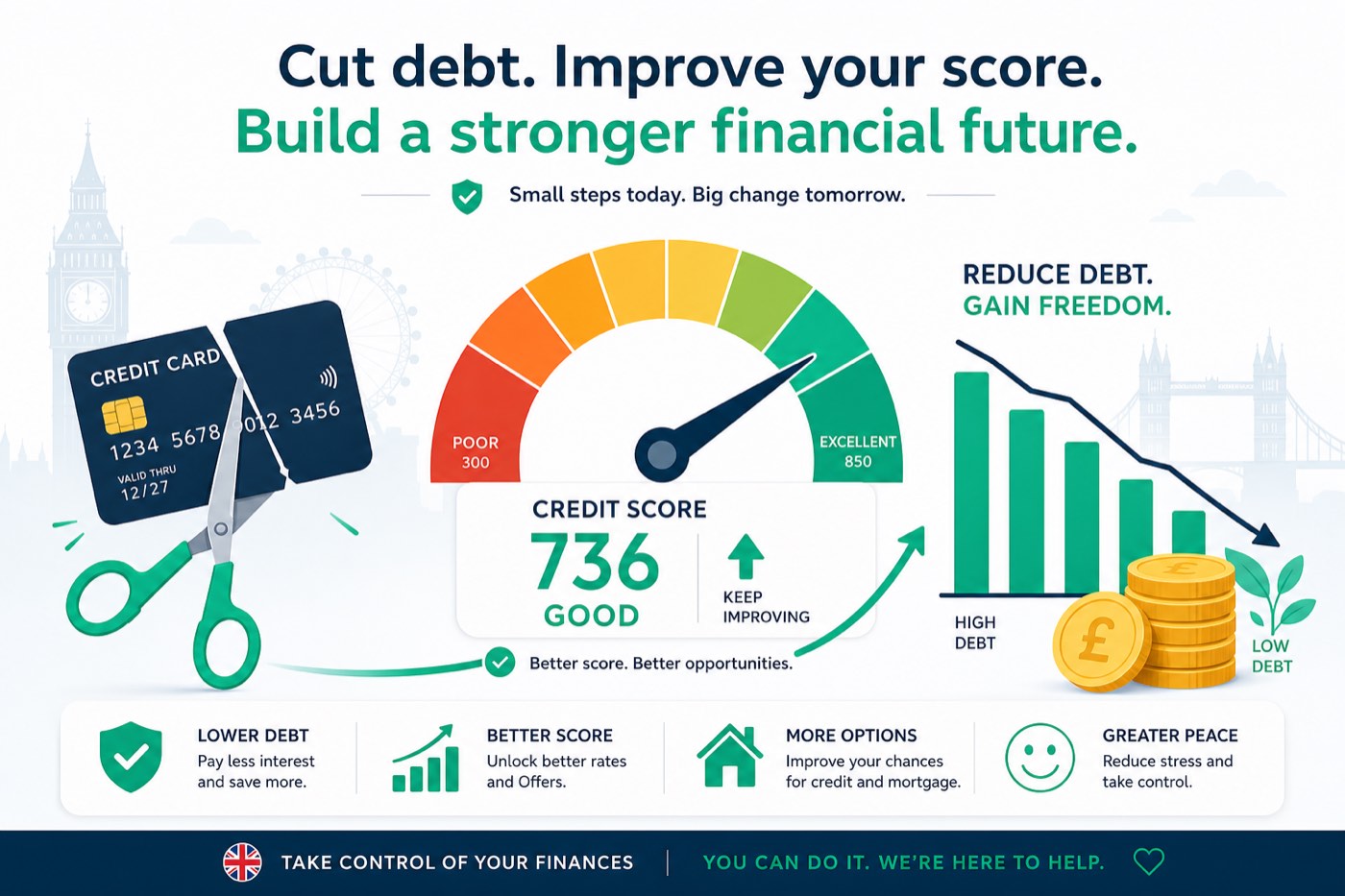
When debts feel unmanageable, the bravest and smartest move is often to talk to someone who does this every day — for free. Charities and publicly backed services can review your budget, contact creditors, explain options such as debt management plans or Breathing Space, and check benefits you might be missing. You do not need to face aggressive collection letters alone, and you should not pay upfront fees to companies promising to “write off” debt. Early contact almost always expands your options compared with waiting until bailiffs or court paperwork arrive.
Who this guide is for
Anyone in the UK losing sleep over arrears, relying on credit for essentials, receiving enforcement letters or unable to meet minimums. Free advice is appropriate before the situation becomes a crisis.
Not for: People looking for a paid lead-generator or an instant promise to write off debt; use a free, authorised provider and verify who you are dealing with.
Who to contact
StepChange and National Debtline specialise in debt advice. Citizens Advice can help with wider money and consumer issues. MoneyHelper (backed by government) offers guides and tools and can point you to advice. Start wherever you feel most comfortable — all are legitimate entry points.
Links: StepChange, National Debtline, MoneyHelper debt help.
What advice sessions typically cover
Expect questions about income, essentials, priorities and creditors. Advisers help you build a realistic household budget and map options. Those might include negotiated repayments, a debt management plan, Breathing Space protection where eligible, or in some cases insolvency routes — explained carefully, not sold as products.
You do not need a perfectly tidy spreadsheet before you call. Approximate figures are enough to start; advisers will help you refine them. If English is not your first language, or you need a different format because of disability, ask about accessible services — free advice providers are used to adapting.
Bring a list of threats with deadlines (court dates, eviction notices, warrant letters). Those shape which options are realistic this week versus next month. Follow-up is part of the process: one conversation rarely fixes everything, but it replaces dread with a numbered plan.
Getting advice itself does not “damage your credit” the way some people fear. Some solutions can affect your file; advisers explain trade-offs so you can choose with eyes open.
Write down questions beforehand: Can I keep my car? What happens to my joint debts? Will this affect a future mortgage timeline? Clear questions produce clearer answers. If you leave a session unsure, ask for a written summary of the recommended next steps.
Avoid paid debt traps
Be wary of cold calls, social ads promising instant write-offs, or firms that charge large fees for insolvency packaging without clear regulated advice. If in doubt, hang up and use the free organisations above. Check firms on the FCA Register when credit-related services are involved.
Some lead-generators re-sell your details to multiple firms. If you only wanted information, that inbox flood is a clue you left the free-advice path. Stick to organisations you typed yourself from MoneyHelper, GOV.UK or this guide’s links.
Friends and family can be supportive listeners, but they are not a substitute for trained advisers who know enforcement timetables and creditor negotiation norms. Bring a trusted person to a call for moral support if you like — just make sure the advice source remains a free, reputable service.
What good debt advice looks like
Good debt advice begins with your whole position: household income, benefits, assets, every creditor, contractual bills, arrears, enforcement stage and country of residence. A provider recommending one product before collecting that information is not doing a proper assessment. Scotland, England and Wales, and Northern Ireland have different formal solutions.
| Warning sign | Safer response |
|---|---|
| Upfront fee for “government scheme” | Stop and use a free debt-advice charity |
| Guaranteed percentage write-off | Ask for all alternatives and risks in writing |
| Cold call requesting bank login | End call; contact provider independently |
| Pressure to sign today | Pause and verify FCA authorisation |
Prepare without delaying contact. Gather recent statements, payslips or benefit awards, tenancy/mortgage details, council tax and energy letters, vehicle finance, court documents and an honest monthly budget. Estimates are acceptable for a first conversation; missing one statement should not stop you calling.
Second example: Dean has £18,000 unsecured debt and sees an advert saying an IVA will reduce it to £90 monthly. A free adviser finds he rents, has irregular wages, £800 council tax arrears and cannot sustain £90 in lean months. They first stabilise priority arrears and explain informal payments and formal options, including credit-file, asset, fee and failure consequences. The correct route cannot be inferred from total debt alone.
- Deal with immediate safety: food, medication, housing, energy and urgent court dates.
- Contact a free adviser through a trusted directory.
- Give complete information, including debts to family and government.
- Ask which options were considered, why any were rejected, total fees and what happens if income changes.
- Take notes and request documents before consenting.
- Tell creditors you are obtaining advice, but do not assume this creates legal protection automatically.
Possible outcomes range from budgeting and creditor negotiation to a debt management plan, insolvency remedy or statutory breathing-space protection. Each has eligibility rules and consequences; “free advice” does not mean every resulting arrangement has no costs. An adviser should explain those costs.
If mental health, coercive control, gambling or addiction affects the debt, say so. It may change communication needs and support. Do not share one-time passcodes or move money to a “safe account”. Find established services through MoneyHelper and check firms on the FCA Register. This is general signposting, not a recommendation of a debt solution.
Worked UK example: from panic to a single plan
After a job loss, Chris juggles four credit cards, rent arrears starting to build, and sleepless nights. Chris completes an online budget with a free advice charity, pauses unplanned card payments that were starving the rent, and gets help drafting affordable offers.
Within weeks Chris has one plan instead of four conflicting guesses, a referral pathway for Breathing Space eligibility checks, and a benefits review that finds support Chris had not claimed. The interest still exists — but the chaos does not. Chris also learns which debts are priorities, so the next tight month does not repeat the rent-versus-credit-card mistake.
Step-by-step checklist
- Gather recent bank statements, bills and creditor letters.
- List every debt with balances and contacts.
- Contact StepChange, National Debtline, Citizens Advice or MoneyHelper.
- Be honest about income and spending — advice is only as good as the budget.
- Ask about priority debts, Breathing Space and benefits checks.
- Ignore paid cold-call debt “solutions”.
- Follow up on agreed actions and keep records.
Common mistakes
- Paying a company for advice you can get free.
- Hiding debts from the adviser because of embarrassment.
- Borrowing more while waiting for a magic wipe-out.
- Assuming advice is only for people with “nothing left”.
When to get regulated help
Go directly to StepChange, National Debtline, Citizens Advice or MoneyHelper. For consumer rights context see GOV.UK. This article is general information, not personal debt advice.
Frequently asked questions
Will debt advice hurt my credit score?
Seeking advice does not itself score you down. Some debt solutions can affect your credit file; advisers explain this before you commit.
Is Breathing Space the same as writing off debt?
No. Breathing Space is a pause on most enforcement and interest in eligible cases while you get advice — not an automatic write-off.
Can advisers talk to my creditors?
Yes, many will help you communicate or negotiate based on a completed budget, with your permission.
What if I’m self-employed?
You can still get free advice. Have recent accounts or income records ready; self-employed budgets need a little more detail.
Will speaking to a debt adviser hurt my credit score?
The conversation itself is not normally a credit-file entry. Actions later agreed, such as reduced payments or insolvency, can affect the file and should be explained first.