Save the biggest deposit you sensibly can
Lenders price mortgages by loan-to-value. Crossing the next LTV threshold — even by a small amount — can cut your rate and monthly payment.
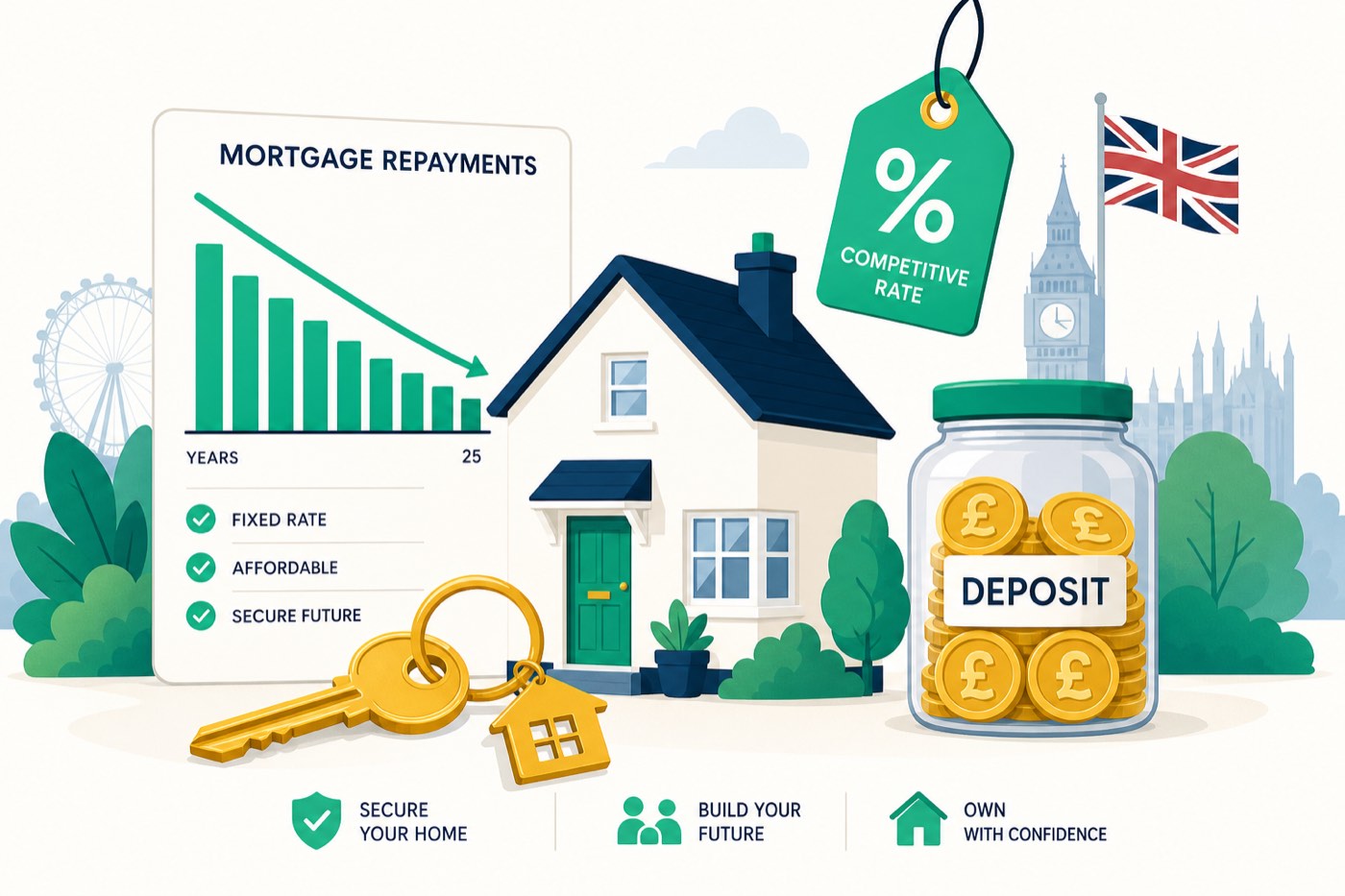
Your deposit does more than prove commitment — it sets your loan-to-value (LTV), the share of the property you borrow. Many UK lenders sharpen rates at bands such as 95%, 90%, 85%, 80%, 75% and 60% LTV. A buyer stuck at 91% LTV can sometimes unlock a better price simply by saving (or negotiating) enough to reach 90%. That is why deposit planning is strategy, not just a savings total.
Who this guide is for
UK first-time buyers estimating a deposit target that includes purchase costs and a post-completion buffer. It helps compare higher and lower loan-to-value borrowing.
Not for: Anyone needing a mortgage recommendation or exact affordability decision; speak to an authorised mortgage adviser or lender.
LTV bands in practice
Minimum deposits are often 5% for eligible residential purchases (95% LTV), though availability and stress tests vary. As LTV falls, risk to the lender falls, and product ranges usually improve. Ask brokers or lenders which bands they use — a 1% deposit difference can matter more around a threshold than in the middle of a band.
Remember other purchase costs: conveyancing, surveys, valuations, moving, and Stamp Duty where it applies. Emptying every pound into the deposit with zero buffer can backfire if something breaks the week after completion.
New-build incentives, gifted deposits and chain-free sales can change cash-flow timing. Gifted deposits usually need a letter confirming no repayment is expected; lenders scrutinise this. If a family member is helping, talk early so solicitor and lender paperwork does not delay exchange.
Region matters too. Average prices in London and parts of the South East push deposits into uncomfortable territory even at 10% LTV, which is why shared ownership and longer saving timelines are common there. Elsewhere, the binding constraint may be mortgage affordability rather than the cash deposit — know which constraint you actually face.
Ways people bridge the gap responsibly
Regular saving into a high-interest account or cash ISA, gifts from family (documented correctly), and — for eligible first-time buyers — products like a Lifetime ISA can help. Shared ownership and other schemes change the deposit maths; treat them as separate paths with their own rules.
Improve credit and reduce card balances before you apply so affordability and product access are not the weak link after you have saved hard. See our credit report guide.
MoneyHelper’s mortgage guides are a solid primer: buying a home.
Track deposit progress against a specific property band, not a vague “as much as possible.” If the next LTV threshold is £6,000 away and your timeline is twelve months, that is £500 a month — a number you can test against your budget. If the maths fails, widen the search area, consider a cheaper property tier, or extend the timeline rather than hoping prices fall to meet you.
Do not stretch into an unsafe purchase
A larger deposit on a home you can barely afford still leaves you exposed if rates rise at remortgage or if income dips. Affordability, not just LTV, should gate your offer price. This is information, not a recommendation to buy.
Deposit plus the costs around it
The deposit is only one cash requirement. Buyers also need legal work, searches, survey, removals, possible product or broker fees, immediate repairs and a reserve after completion. Stamp taxes depend on location, price, ownership history and rules at completion: SDLT in England and Northern Ireland, LBTT in Scotland and LTT in Wales.
| £250,000 purchase | Cash amount | Mortgage before fees |
|---|---|---|
| 5% deposit | £12,500 | £237,500 |
| 10% deposit | £25,000 | £225,000 |
| 15% deposit | £37,500 | £212,500 |
A lower loan-to-value can unlock different rates, but waiting has a cost if prices or rent change. Compare real mortgage illustrations rather than assuming every extra 5% produces a large rate improvement. Affordability is based on income, committed spending, dependants, credit history and stress testing—not only deposit percentage.
Second example: Sian and Luke target a £280,000 home with 10% deposit (£28,000). They estimate £2,200 legal/search costs, £600 survey, £1,000 moving and £3,500 emergency reserve: total £35,300 before any property tax. They have £21,500 and save £650 monthly, so the gap takes about 22 months ignoring interest and price changes. A £15,000 deposit target alone would have given a misleading timeline.
- Choose a cautious property-price range from lender affordability, not portal aspirations.
- Calculate deposit bands at 5%, 10% and 15%.
- Add country-specific purchase tax using the official calculator.
- Quote legal, survey, mortgage and moving costs separately.
- Retain a post-completion reserve; do not send every pound to the conveyancer.
- Document deposit source early, including gifts and LISA withdrawals.
A gifted deposit usually requires a declaration that it is not a repayable loan and evidence for anti-money-laundering checks. A family loan can affect affordability and lender acceptance. Large unexplained cash deposits delay conveyancing, so keep statements showing accumulation.
Lifetime ISA holders can receive a 25% bonus on up to £4,000 contributed yearly, but qualifying purchase rules include the account age and £450,000 property cap. A non-qualifying withdrawal normally faces a charge. Help to Buy ISAs are closed to new applicants but existing holders may retain scheme rights.
Mortgage payments can rise and property values can fall. Use MoneyHelper and official tax calculators. This is general information, not mortgage, legal or tax advice.
Worked UK example: nudging under 90% LTV
A flat costs £280,000. With a £22,400 deposit (8%), the loan is £257,600 — about 92% LTV. Saving another £5,600 reaches a £28,000 deposit (10%) and 90% LTV.
If the 90% products are meaningfully cheaper than the 95%/92%-style range the couple was quoted, the extra months of saving can reduce monthly payments for the whole fix period — often worth more than the frustration of waiting. They keep £3,000 aside separately for fees and a starter emergency fund rather than putting literally every pound into the deposit.
Step-by-step checklist
- Decide a realistic price range and map deposits needed for each LTV band.
- Budget separately for fees, moving costs and a cash buffer.
- Automate deposit savings and track the gap to the next threshold.
- Check first-time buyer tools (e.g. LISA) only if rules fit your plans.
- Tidy credit and reduce expensive debts before applying.
- Get a Decision in Principle when you are close — not as your first step years early without a plan.
- Reconfirm rates and stress tests near offer stage; products change.
Common mistakes
- Focusing on headline house price without modelling LTV bands.
- Draining every liquid pound so any repair becomes new debt.
- Forgetting Stamp Duty, surveys and solicitor costs.
- Assuming 5% deals are always available for your circumstances.
When to get regulated help
Read MoneyHelper on buying a home and mortgage information on GOV.UK housing pages. For product selection, speak to an FCA-regulated mortgage adviser or broker. Your home may be repossessed if you do not keep up repayments.
Frequently asked questions
Is a 5% deposit enough?
Sometimes, if lenders offer suitable 95% LTV products and you pass affordability checks. Rates are usually better with larger deposits.
Does a bigger deposit always mean a better rate?
Often, especially when you cross lender LTV thresholds, but credit profile and product features also matter.
Can I use bonus or commission toward a deposit?
Yes if it is money you truly have and can evidence; lenders also assess how sustainable your income is.
What is LTV?
Loan-to-value: the mortgage as a percentage of the property’s value (or purchase price, as the lender defines for the product).